You worked hard to lose the weight. Maybe it took bariatric surgery, maybe it was years of discipline and a GLP-1 medication like Ozempic or Wegovy. Either way, you got there. But now you’re dealing with something nobody warned you about — excess skin that doesn’t go away on its own, no matter how much you exercise or how clean you eat.
This is one of the most common frustrations we hear from post-weight loss patients at our Stamford practice. The scale moved. The clothes changed. But the body in the mirror still doesn’t reflect what you’ve accomplished. If that sounds familiar, you’re not alone — and there are real surgical options designed specifically for this situation.
What Is Bariatric Plastic Surgery and Who Is It For?
Bariatric plastic surgery is the term we use for body contouring procedures performed after significant weight loss — typically following gastric bypass, gastric sleeve, or LAP-BAND surgery, though it increasingly applies to patients who lost weight through GLP-1 medications as well. Our goal is to remove excess skin and reshape the body once the weight itself is gone.
This is not the same as a standard cosmetic tummy tuck or arm lift. Patients who have lost 80, 100, or more pounds have skin that has been chronically stretched — and that skin has lost its elasticity permanently. It won’t bounce back. Surgery is, in most cases, the only effective solution.
The procedures we offer vary depending on where the excess skin is concentrated. The abdomen is the most common area, but many patients also address the arms, thighs, back, and breasts. A thorough consultation helps identify your priorities and map out a realistic plan.
How Do You Know If You’re Ready for Post-Weight Loss Body Contouring?
This is the question we hear most often — and the honest answer is that timing matters more than most patients realize. Jumping into surgery too early can compromise your results and your safety. The general standard is that your weight should be stable for at least three consecutive months before any body contouring procedure is scheduled. For most gastric bypass patients, that means waiting roughly 12 to 18 months after bariatric surgery. For patients who had gastric banding or a duodenal switch, it can be closer to two years.
Why does this matter so much? Because your body is still changing during active weight loss. Skin that looks like it needs removal today may shift again over the next several months. Operating before weight stabilizes means your results won’t hold the way they should — and you may end up needing revision surgery down the line.
Beyond weight stability, there are a few other candidacy factors worth knowing about. Your nutritional levels — particularly protein and hemoglobin — need to be in a healthy range before surgery is safe. Massive weight loss can deplete these, and a depleted body doesn’t heal well. We typically coordinate with your bariatric team or primary care physician to confirm you’re medically cleared before moving forward.
BMI is also a consideration. We generally look for a BMI under 32 to 35 for elective body contouring, though this varies by procedure and individual circumstances. Being a non-smoker — or committing to stopping well before surgery — is another standard requirement, since smoking significantly impairs wound healing.
One thing we encourage: don’t wait until you feel “completely ready” to come in for a consultation. Many patients benefit from meeting with us while weight loss is still in progress. It gives us time to plan, discuss staging, and address any insurance questions early — before you’re standing at the finish line wondering what comes next.
What Does Excess Skin Actually Do to Your Body Beyond Appearance?
The cosmetic frustration is real — but it’s worth understanding that excess skin after massive weight loss isn’t purely an aesthetic issue. The skin folds that develop, particularly around the abdomen and groin, create warm, moist environments that are prone to yeast infections, bacterial infections, and chronic rashes. These aren’t occasional inconveniences. For many patients, they’re recurring medical problems that interfere with daily life, exercise, and basic hygiene.
The overhanging abdominal pannus — the apron of skin that can fold down over the pubic area — can make it difficult to keep the skin beneath it clean and dry. Patients describe painful irritation during walks or workouts, skin breakdown that won’t fully heal, and clothing that fits nowhere near the way it should for someone who has lost over 100 pounds.
This distinction between cosmetic and functional matters for more than just your quality of life. Procedures like panniculectomy — the surgical removal of the hanging skin apron — may qualify for insurance coverage when there is documented medical necessity, such as recurring infections or documented hygiene problems. A full abdominoplasty that also tightens the abdominal muscles and reshapes the waistline is generally considered cosmetic and not covered. Understanding this difference upfront can meaningfully affect how you approach the financial side of surgery.
The functional argument for body contouring after weight loss is well-supported in published research. Studies consistently show sustained quality-of-life improvement in patients who undergo these procedures — not just in how they look, but in how they move, how they feel about their bodies, and how they engage with the world around them. For patients who have already made such a significant investment in their health, that outcome is worth understanding clearly.
Surgery to Remove Excess Skin vs. Liposuction — Understanding the Difference
These two goals sound similar but involve different procedures, and mixing them up leads to a lot of confusion. Liposuction is designed to remove pockets of stubborn fat in patients who are already near their goal weight and have reasonable skin elasticity. It works well in the right candidate. But for someone who has lost 100 or more pounds, the primary problem isn’t fat — it’s skin that has lost its structure entirely.
If you’re searching for surgery to address belly skin after significant weight loss, what you likely need is an abdominoplasty or panniculectomy, not liposuction alone. In some cases, we use liposuction alongside excisional procedures to refine the final contour — but it’s a supporting tool, not the main event.
Abdominoplasty vs. Panniculectomy — Which One Do You Actually Need?
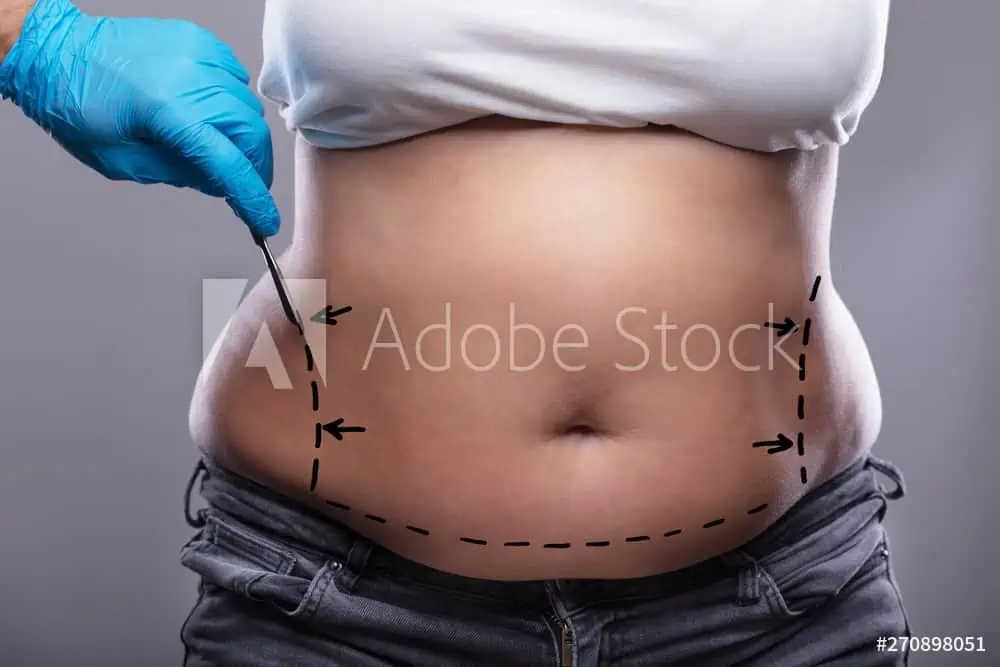
These two procedures are often confused, and the difference is important — both medically and financially. A panniculectomy removes the hanging skin apron (the pannus) that folds over the lower abdomen and groin. It addresses the overhang, but it doesn’t tighten the abdominal muscles or reshape the waistline. It’s a functional procedure, and when there’s documented medical necessity, it may be covered in part by insurance.
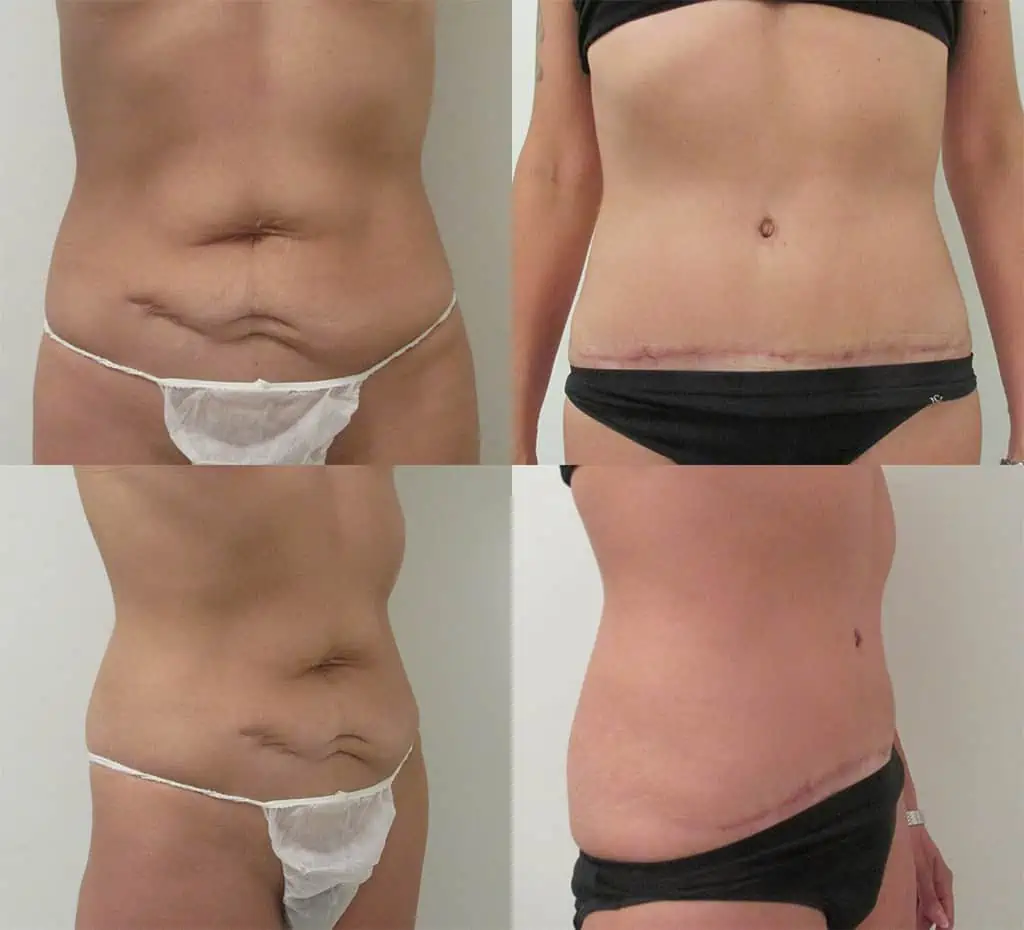
An abdominoplasty — commonly called a tummy tuck — goes further. It removes excess skin, tightens the underlying abdominal muscles that have often separated or weakened after significant weight changes, and reshapes the entire midsection. For post-bariatric patients, the result is a dramatically flatter, more defined abdominal profile. This is typically classified as a cosmetic procedure and is not covered by insurance, though we offer financing options.
For patients who have lost a very large amount of weight, a standard tummy tuck may not be sufficient. A fleur-de-lis abdominoplasty — which includes both a horizontal and vertical incision — addresses excess skin in multiple directions and is often more appropriate for massive weight loss cases. The tradeoff is a longer scar, but for patients dealing with significant skin laxity in both the horizontal and vertical planes, it produces far better results than a standard approach.
We also want to be clear about something: the techniques we use for a post-bariatric patient are not the same ones used for a typical cosmetic tummy tuck patient. The tissue quality is different. The skin distribution is different. The healing considerations are different. Post-bariatric body contouring requires a surgeon who has genuine experience with this specific population — not just someone who performs tummy tucks on patients who want to look better in a bathing suit. Both are valid goals, but they are not the same procedure in practice.
What About the Arms, Thighs, and Breasts — Does Everything Get Done at Once?
For most post-bariatric patients, the abdomen is the priority — but it’s rarely the only area of concern. Excess skin on the upper arms (addressed with a brachioplasty, or arm lift), inner thighs (thighplasty), back, and breasts (mastopexy, or breast lift) are common follow-up needs.
The short answer to whether everything can be done at once: usually no, and that’s by design. Attempting to address multiple body areas in a single long operation carries significantly higher risks — extended anesthesia time, greater blood loss, and a much harder recovery. Staging procedures across separate operations is the standard of care, and it’s how we approach complex post-bariatric cases responsibly.
What staging actually looks like in practice is a prioritized plan built around your specific anatomy, your health, and your goals. We typically start with the area causing the most functional or emotional impact — often the abdomen — and plan subsequent procedures once you’ve fully recovered and your body is ready. Some patients complete their full transformation over 12 to 18 months. Others address one area and feel satisfied stopping there. There’s no single right answer, and the plan should be yours.
For patients coming to us from across Fairfield County — whether from Greenwich, Westport, Darien, or Norwalk — the consultation is where this conversation starts. You don’t need to have everything figured out before you come in. That’s what the consultation is for.
Finding the Right Bariatric Plastic Surgeon in Fairfield County, CT
You’ve already done the hardest part. What’s left is finding a surgeon who actually understands what post-weight loss patients need — not just someone who performs cosmetic procedures and can technically do a tummy tuck.
At our Stamford practice, Dr. Chang Soo Kim brings more than 30 years of experience serving patients across Fairfield County, with a background that spans both reconstructive and aesthetic surgery. That combination matters for post-bariatric patients, whose needs don’t fit neatly into either category alone. Board-certified by the American Board of Plastic Surgery and a member of the ASPS, Dr. Kim has built a practice around personalized care — the kind where you leave a consultation feeling like someone actually listened.
If you’re in Stamford, Greenwich, Westport, Norwalk, Darien, or anywhere else in Fairfield County and you’re ready to take the next step, reach out to Dr. CS Kim Plastic Surgery to schedule a consultation. The conversation is a good place to start.