You’ve done everything right — the diet, the exercise, the consistency — and your stomach still doesn’t reflect any of it. Loose skin doesn’t tighten on its own. Separated abdominal muscles don’t close with core workouts. And for a lot of people, the idea of a traditional tummy tuck feels like too much: too much recovery, too much anesthesia, too much disruption to a life that doesn’t pause easily.
That’s where laser-assisted techniques come in — not as a shortcut, but as a more precise, more targeted set of tools. Here’s what they actually involve, what results look like, and how to know whether they make sense for you.
What a Laser Tummy Tuck Actually Does (and What It Doesn’t)
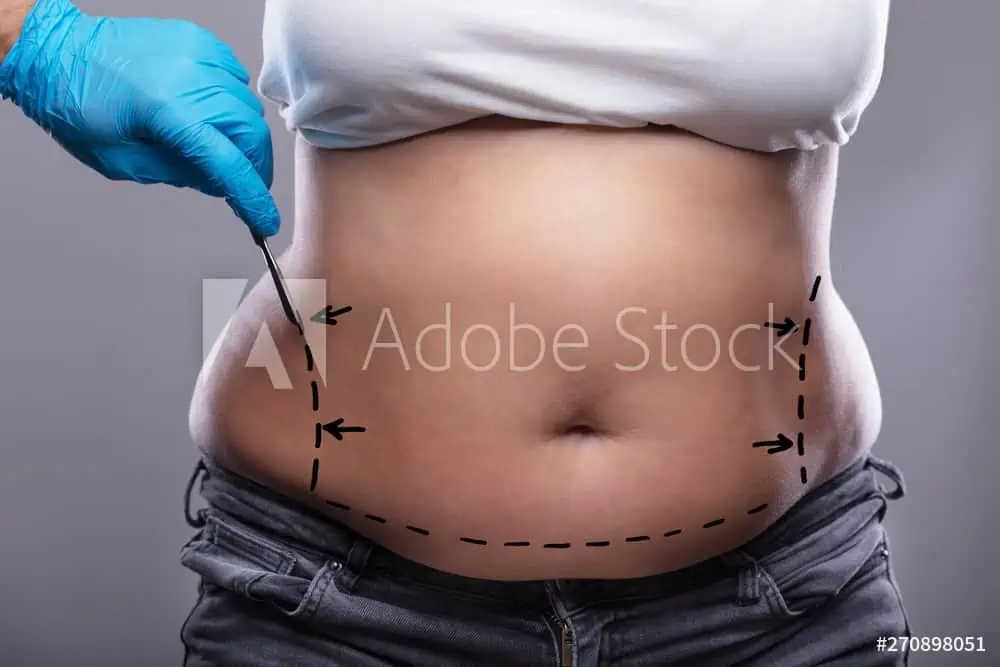
“Laser tummy tuck” isn’t a single defined procedure — it’s a category. It refers to abdominoplasty techniques that incorporate laser energy to improve precision, reduce trauma to surrounding tissue, and stimulate collagen production in the skin. The laser component works on two levels: it helps remove fat more selectively than traditional methods, and the thermal energy it delivers encourages the skin to tighten from within rather than relying solely on excision.
What it doesn’t do is eliminate the surgical nature of the procedure. Incisions are still involved. What changes is the degree of trauma, the quality of skin response, and in many cases, the recovery experience. For patients who are close to their goals but dealing with stubborn skin laxity or mild fat deposits, laser-assisted techniques can close that gap without the full scope of traditional open surgery.
Awake Tummy Tuck Before and After: What to Expect Without General Anesthesia
One of the most common reasons people hesitate on a tummy tuck isn’t the surgery itself — it’s the anesthesia. General anesthesia carries real considerations: systemic effects, extended grogginess, nausea during recovery, and for some patients, genuine anxiety about being fully under. An awake tummy tuck, performed under tumescent local anesthesia, addresses that directly.
Tumescent anesthesia uses a dilute solution of lidocaine and epinephrine injected into the treatment area. You remain comfortable and aware throughout the procedure, but the area being worked on is completely numb. There’s no intubation, no post-anesthesia fog, and for appropriate candidates, the recovery tends to start cleaner — less nausea, less systemic fatigue, and a faster return to baseline function.
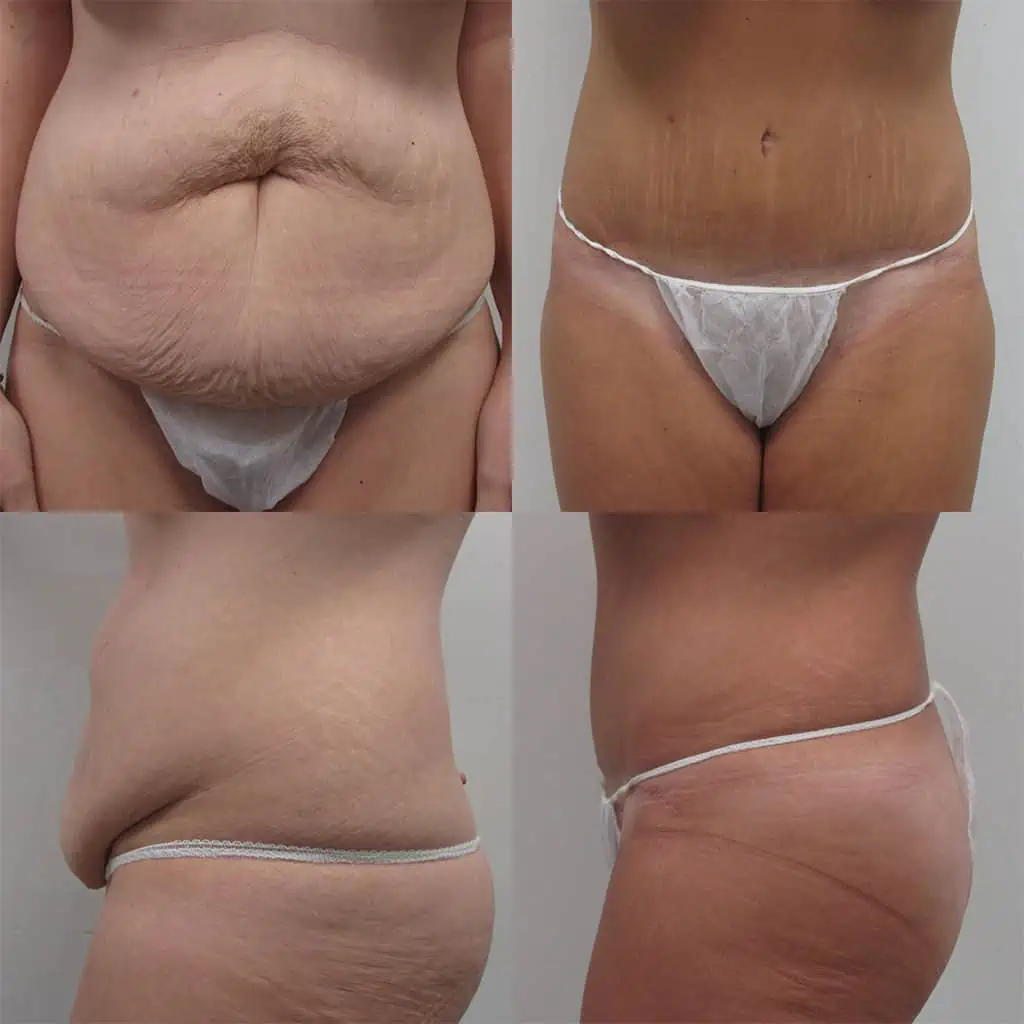
Before-and-after results from awake tummy tuck procedures reflect the same goals as traditional abdominoplasty: a flatter, smoother abdominal profile with improved skin quality. The difference shows up in the recovery experience more than the outcome itself. Patients who are good candidates — those with mild to moderate skin laxity, stable weight, and no significant muscle separation requiring repair — often find the awake approach meaningfully easier to get through.
It’s worth being honest here: not everyone qualifies. Patients with significant diastasis recti, extensive skin excess, or other anatomical factors may still need a traditional approach with general anesthesia to get the result they’re actually after. The goal of a thorough consultation is to match the technique to the patient — not to fit every patient into the same technique.
Tummy Tuck Without Muscle Repair Before and After: Who This Is Actually For
Most people assume a tummy tuck always includes muscle repair — the plication step where separated abdominal muscles are stitched back together. It’s a common misconception, and it matters because muscle repair is also the part of the procedure responsible for most of the pain and the longer recovery.
A tummy tuck without muscle repair is a legitimate, clinically appropriate option for patients whose primary concern is excess skin and subcutaneous fat — not diastasis recti. If your muscles are intact and your issue is skin laxity following weight loss or pregnancy, skipping the plication step means a less invasive procedure, a significantly more comfortable recovery, and outcomes that are still genuinely transformative.
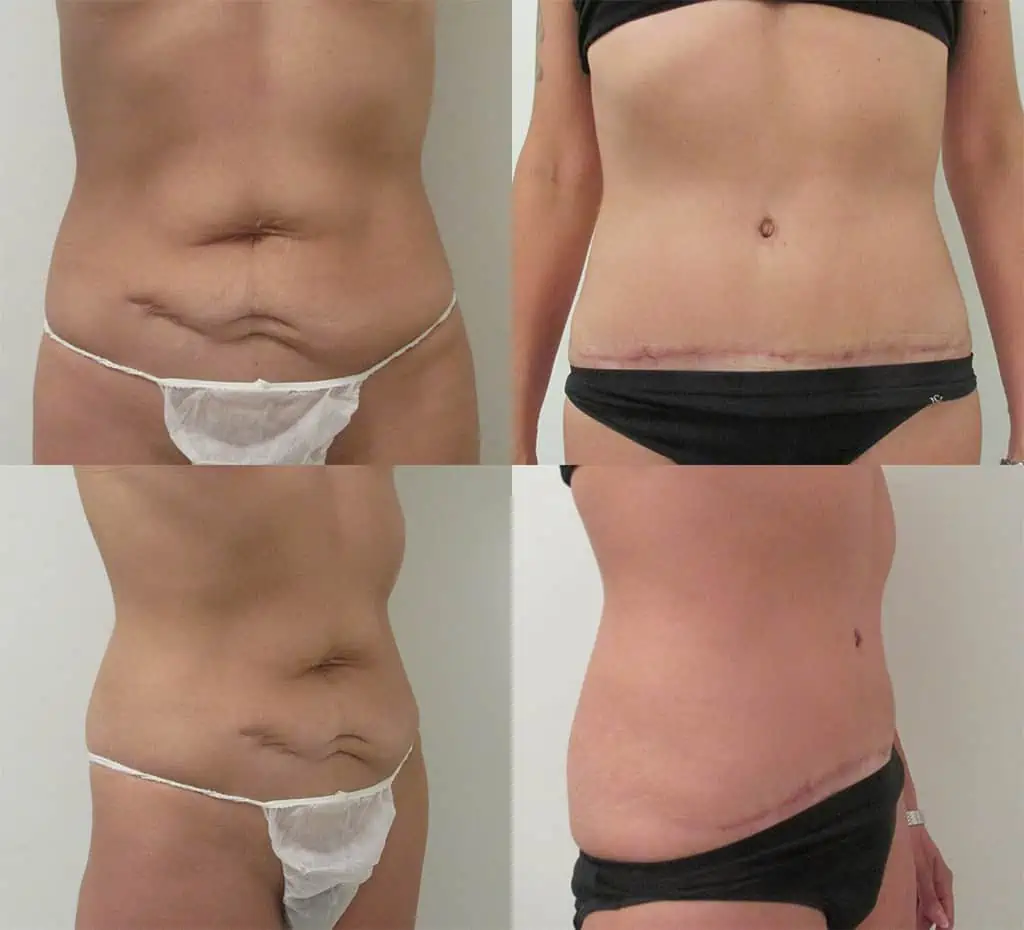
Before-and-after results from skin-focused tummy tucks — without muscle plication — show real improvement in abdominal contour, particularly when combined with laser-assisted liposuction for additional definition. The skin is smoother, the profile is flatter, and the overall silhouette is more proportionate. What you won’t see in these cases is the dramatic internal restructuring that muscle repair provides — because for these patients, that restructuring wasn’t necessary to begin with.
This distinction matters most during the candidacy conversation. A surgeon who evaluates your anatomy honestly and recommends only what you actually need — rather than defaulting to the most comprehensive procedure — is giving you better care, not lesser care.
Reverse Tummy Tuck Photos and the Upper Abdomen Problem Most Surgeons Skip Over
Traditional abdominoplasty targets the lower abdomen — the area below the belly button where most post-pregnancy and post-weight-loss changes concentrate. But some patients have significant laxity in the upper abdomen, above the navel, that a standard tummy tuck simply cannot reach. That’s where the reverse tummy tuck comes in.
A reverse abdominoplasty uses an incision placed near the bra line or inframammary fold rather than the bikini line. It lifts and tightens the upper abdominal skin in a way that traditional approaches can’t access. For patients who’ve lost a significant amount of weight and have upper abdominal skin changes, or for those whose anatomy places their primary concern above the belly button, this is a genuinely different procedure — not just a variation of the standard technique.
Reverse Tummy Tuck Results: What the Photos Show and What to Realistically Expect
Reverse tummy tuck before-and-after photos look notably different from standard abdominoplasty results — and that’s the point. The improvement concentrates in the upper abdominal region, often producing a cleaner transition between the ribcage and the midsection that patients with upper laxity have never been able to achieve through diet or exercise.
Because the incision sits near the bra line, it’s typically well-concealed under clothing, including swimwear. For patients who spend summers on the water or at the beach clubs along Long Island Sound — a significant part of life for many Fairfield County residents — that placement matters. The goal is a result you can live in, not one you have to hide.
Recovery from a reverse tummy tuck is generally comparable to a standard procedure in terms of timeline, though the discomfort profile differs since the surgical site is in a different location. Most patients return to light activity within two to three weeks, with full results visible at three to six months as swelling resolves and the skin settles.
The most important thing to understand about reverse tummy tuck candidacy is that it’s a specific solution for a specific problem. It’s not a universal upgrade or an alternative to traditional abdominoplasty — it’s the right tool for patients whose anatomy calls for it. A detailed consultation, including a physical assessment, is the only way to determine whether the reverse approach, the traditional approach, or a combination of techniques will get you where you want to be.
How Do I Know Which Tummy Tuck Technique Is Right for Me?
This is genuinely the most important question — and the honest answer is that you probably can’t know for certain until a board-certified plastic surgeon has evaluated your anatomy in person. But there are patterns worth understanding before you walk into a consultation.
If your primary concern is loose skin with minimal fat and no significant muscle separation, a skin-focused tummy tuck — with or without laser assistance — may be sufficient. If you’ve been through pregnancy and notice your core feels weak or your abdomen protrudes even when you’re at a healthy weight, muscle repair is likely part of the picture. If your concern is concentrated above the belly button, a reverse approach deserves serious consideration. And if general anesthesia is a significant barrier for you, an awake procedure under tumescent anesthesia may be worth discussing as a candidacy question.
For patients across Fairfield County, CT — whether you’re in Greenwich, Westport, Darien, New Canaan, Norwalk, Wilton, Ridgefield, or Stamford — you have access to the full spectrum of these techniques without settling for a one-size-fits-all answer. We’ve been performing tummy tuck procedures in this community for over 30 years, and the single most consistent thing we’ve learned is that the right outcome starts with an honest assessment — not a predetermined treatment plan.
We were also the first physician in Connecticut to offer the Sciton Joule laser system, which means our team has more hands-on experience with laser-assisted body contouring than any other practice in the state. That matters when the technique you need requires precision, not just familiarity.
Choosing a Laser Tummy Tuck Surgeon in Fairfield County
The technology behind laser-assisted tummy tuck procedures is genuinely useful — but it’s only as good as the surgeon applying it. Knowing which technique fits your anatomy, being honest about what you can and can’t achieve with a laser-only approach, and having the surgical range to offer everything from an awake procedure to a full reverse abdominoplasty — that combination is what actually produces results people are satisfied with long-term.
If you’re somewhere in the research phase — not ready to book, just trying to understand your options — that’s exactly the right place to start a conversation. A consultation isn’t a commitment. It’s information.
When you’re ready to talk through what your specific situation calls for, we’re here. Yale-trained, board-certified, and based in Stamford at the center of Fairfield County — we’d be glad to give you a straight answer about what’s realistic for you.