You eat well. You exercise. And there’s still that one spot — the lower belly, the flanks, the inner thighs — that just won’t budge. You’ve looked into your options, and now you’re somewhere between “I don’t want surgery” and “I’m not sure non-surgical treatments actually work.”
That’s exactly where most people land before they start doing real research. And it’s a fair place to be, because the answer isn’t simple — and anyone who tells you it is probably has something to sell you.
We offer both surgical and non-surgical body contouring at our Stamford practice, which means we have no reason to push you toward one or the other. What follows is a straightforward look at both, so you can walk into a consultation already knowing the right questions to ask.
Non-Surgical Body Contouring: What It Actually Does (and Doesn’t Do)
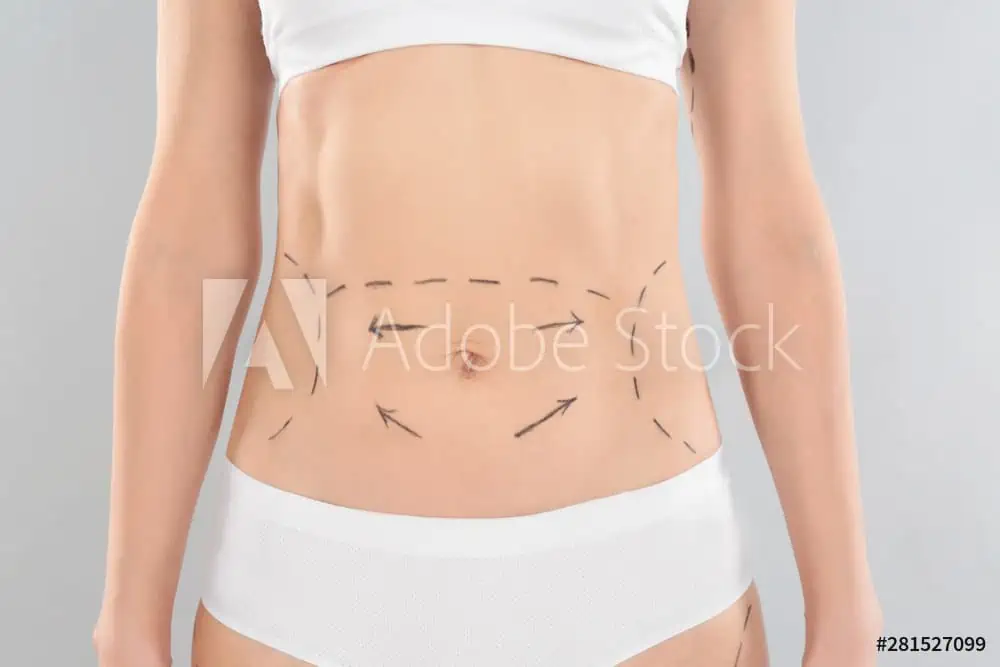
Non-surgical body contouring is a category of treatments that reduce fat, tighten skin, or build muscle — without incisions, anesthesia, or recovery time. The technologies vary widely: some use controlled cooling to destroy fat cells, others use radiofrequency energy or laser heat, and some use electromagnetic pulses to stimulate muscle contractions. The mechanism is different, but the goal is the same — reshape specific areas of the body without going under the knife.
What these treatments share is this: they work best on people who are already close to their goal weight and dealing with stubborn, localized fat that won’t respond to diet or exercise. They are not weight-loss tools. If you’re looking to lose 30 pounds, non-invasive body contouring isn’t the right starting point. But if you’re in good shape and frustrated by one or two specific areas, these treatments can produce real, measurable changes.
Non-Invasive Body Sculpting: How the Technology Works
The most widely used non-invasive fat reduction technology is cryolipolysis — the science behind CoolSculpting — which uses precisely controlled cooling to freeze and permanently destroy fat cells in a targeted area. The body then clears those cells naturally over the following weeks. Clinical studies show up to a 22–25% reduction in fat layer thickness per treated area, and results typically become visible around the 6-week mark, with full results at 3 months. It’s been used in over 14 million treatments worldwide, which gives you a sense of how well-established the technology is.
Radiofrequency-based treatments like BodyTite — one of the technologies we use here — take a different approach. RF energy heats the tissue beneath the skin, which does two things simultaneously: it disrupts fat cells and it stimulates collagen production, which means you get fat reduction and skin tightening in the same treatment. This is particularly valuable for patients who have some skin laxity alongside their fat concerns, because cooling-based technologies alone don’t address loose skin.
Then there’s EMSculpt NEO, which combines radiofrequency with high-intensity focused electromagnetic energy (HIFEM). It’s the only FDA-approved non-invasive treatment for lifting and strengthening the glutes, and clinical data shows a 35.6% increase in muscle mass in treated areas. It’s not just a fat reduction tool — it actively builds muscle, which is what makes it genuinely useful for patients who want more definition, not just less fat.
The key thing to understand about all of these is that results are gradual. You won’t walk out of your first session looking different. The changes happen over 6–12 weeks as your body responds to the treatment. That’s actually a feature for many patients — the results look natural because they emerge naturally.
Non-Surgical Butt Lift: A Real Option or Just Marketing?
The non-surgical butt lift is one of the most searched topics in this space, and also one of the most misunderstood. So let’s be direct about what it can and can’t do.
EMSculpt, when applied to the glutes, uses HIFEM energy to induce thousands of powerful muscle contractions in a single session — far more than any workout could produce. The result is measurable lifting and toning of the gluteal muscles, along with some simultaneous fat reduction in the area. It produces real results, but the nature of those results is enhancement and lift — not the dramatic volume addition you’d get from a surgical Brazilian Butt Lift.
Sculptra injections are another non-surgical option for the glutes. Sculptra is a poly-L-lactic acid filler that stimulates your body’s own collagen production over time, gradually adding volume and improving the shape of the buttocks. It requires multiple sessions and patience, but for patients who want a subtle, natural-looking improvement without surgery, it’s a legitimate option.
Where the non-surgical butt lift falls short is for patients who want significant volume, a dramatic shape change, or correction of asymmetry. For those goals, surgical BBL remains the more effective choice. The right option depends entirely on what you’re starting with and what you’re trying to achieve — which is exactly why a consultation with a board-certified plastic surgeon who performs both procedures is worth more than any amount of online research.
We’ve noticed something specific in our Fairfield County practice: a significant uptick in patients who have lost weight on GLP-1 medications like semaglutide and are now dealing with deflated or disproportionate glutes. For this group specifically, a combination of EMSculpt and Sculptra can restore shape and projection without surgery — and it’s a conversation we’re having more and more often.
Non-Invasive Lipo vs. Surgical Liposuction: Which One Is Right for You?
This is the comparison most people are actually trying to make. They’ve heard that non-invasive treatments can reduce fat, and they want to know if they can skip surgery entirely. The honest answer is: sometimes yes, sometimes no — and the difference comes down to how much fat you’re dealing with and whether your skin has the elasticity to contract after fat is removed.
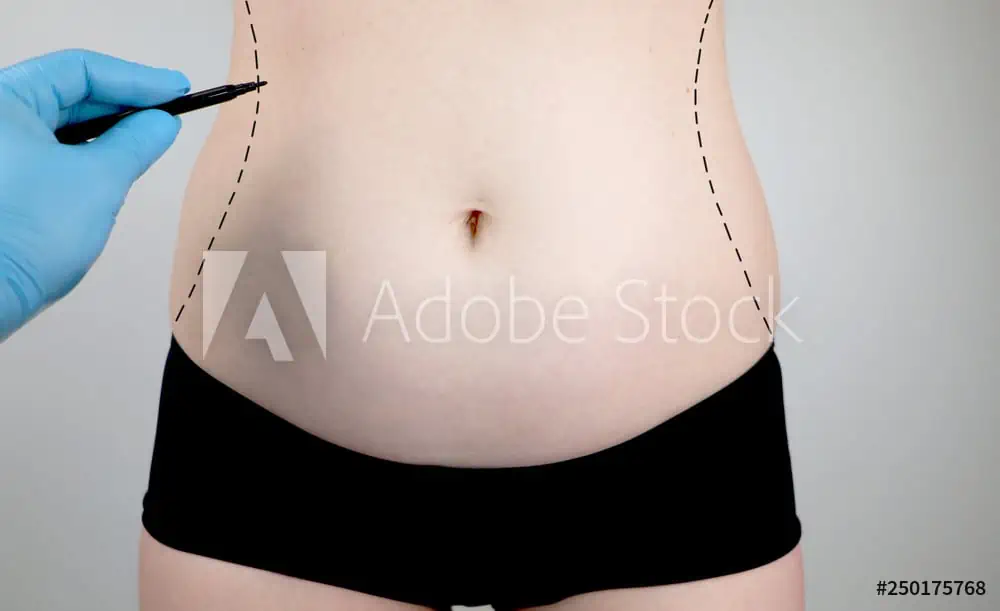
Non-invasive lipo alternatives work well for smaller, localized deposits of fat in patients with good skin tone. Surgical liposuction is more appropriate for larger volumes of fat, multiple areas treated in a single session, or patients who have already tried non-invasive options and want more significant results.
What Non-Invasive Fat Reduction Can Realistically Achieve
The appeal of non-invasive lipo alternatives is obvious — no incisions, no anesthesia, no downtime. For a lot of Fairfield County patients who commute into Manhattan and can’t afford two weeks off, that’s not a minor convenience. It’s the difference between doing something about it and doing nothing.
SculpSure, a laser-based fat reduction system, delivers noticeable results in about 6 weeks and maximum results at 12 weeks, with sessions completable in roughly 25 minutes per treatment area. BodyTite, the RF-based technology we use, goes a step further by addressing both fat and skin laxity simultaneously — which makes it a stronger option for patients in their 40s and 50s who have noticed some skin looseness alongside their fat concerns.
The important caveat is that non-invasive fat reduction works in percentages, not pounds. You’re looking at roughly a 20–25% reduction in fat layer thickness per treated area, per session. For a small pocket of stubborn fat, that’s meaningful. For a patient with a larger volume of fat to address, it may not move the needle enough to feel satisfying. That’s not a failure of the technology — it’s just a matter of matching the right tool to the right problem.
Multiple sessions are usually needed for optimal results, and most patients require two to four treatments per area. The total cost can add up, which is why we offer financing options — so that the upfront number doesn’t become the reason someone settles for less than what they actually want.
When Surgical Liposuction Is the Better Answer
There are situations where non-invasive body contouring is simply not the right tool — and a practice that offers only non-surgical treatments can’t tell you that honestly, because they have nothing else to offer you. We can.
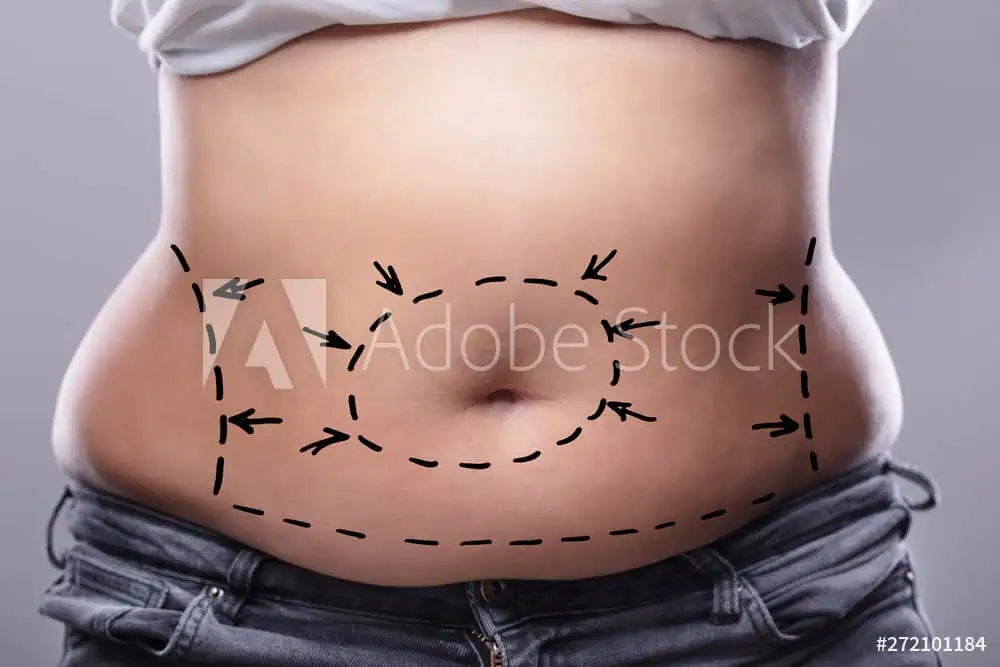
Surgical liposuction remains the most-performed plastic surgery procedure in the United States, with nearly 350,000 procedures performed in 2023 alone — a 7% increase year-over-year. That continued demand exists because it delivers results that non-invasive treatments can’t match in certain situations. When a patient has a significant volume of fat to address, multiple areas to treat, or noticeable skin laxity that requires a tummy tuck or body lift alongside fat removal, surgery produces a more complete and dramatic transformation.
The recovery is real — typically 1–2 weeks of limited activity, with full results visible at 3–6 months. But for patients whose goals genuinely require it, that tradeoff is worth it. The key is going in with accurate expectations, not assumptions shaped by marketing.
What we find, in practice, is that the patients who are happiest are the ones who got a genuine, unbiased assessment of their options before committing. Some people come in expecting to need surgery and leave with a non-invasive plan. Others come in hoping to avoid surgery and, after an honest conversation about their anatomy and goals, decide that surgery is actually the cleaner path to what they want. Neither outcome is better than the other — it just depends on the person.
How to Choose Between Non-Invasive Body Contouring and Surgery
The short version: non-invasive body contouring works — for the right candidate, with realistic expectations, using the right technology. Surgical procedures work too — for a different set of candidates, with different goals and a different tolerance for recovery. Neither is universally better. The question is which one is right for you specifically.
What makes this decision easier is talking to someone who genuinely offers both and has 30+ years of surgical experience informing every recommendation. That’s not a common combination in this market.
If you’re in Stamford or anywhere across Fairfield County and you’re ready to have that conversation, we’re a straightforward place to start. Schedule a consultation with Dr. CS Kim Plastic Surgery and get clarity before you commit to anything.