You’ve done the work. You eat well, you exercise, and your stomach still doesn’t look the way you want it to. Maybe it’s leftover from a pregnancy, or from weight you’ve lost and kept off. Maybe you’ve even tried CoolSculpting already and weren’t thrilled with the results. Whatever brought you here, the question is the same: is there a real non-surgical option that works, or do you eventually need to have the conversation about surgery? The honest answer is — it depends on what’s actually going on with your body. And that’s exactly what we’re going to walk through.
What “Non Surgical Tummy Tuck” Actually Means — and What It Can’t Do
Let’s clear something up first. There is no non-surgical procedure that replicates what a tummy tuck does. The term “non surgical tummy tuck” is a marketing shorthand for a range of non-invasive treatments — CoolSculpting, radiofrequency, ultrasound — that can reduce fat and modestly tighten skin. They’re real, they work for the right patients, and they’re worth considering. But they don’t repair separated abdominal muscles, they don’t remove significant loose skin, and they don’t produce the kind of dramatic contour change that surgery delivers.
Understanding that distinction upfront is what makes a good consultation. When you know what each option is genuinely capable of, you can make a decision based on your actual goals — not on what sounds most appealing in the moment.
CoolSculpting for the Stomach: What It Does Well and Where It Falls Short
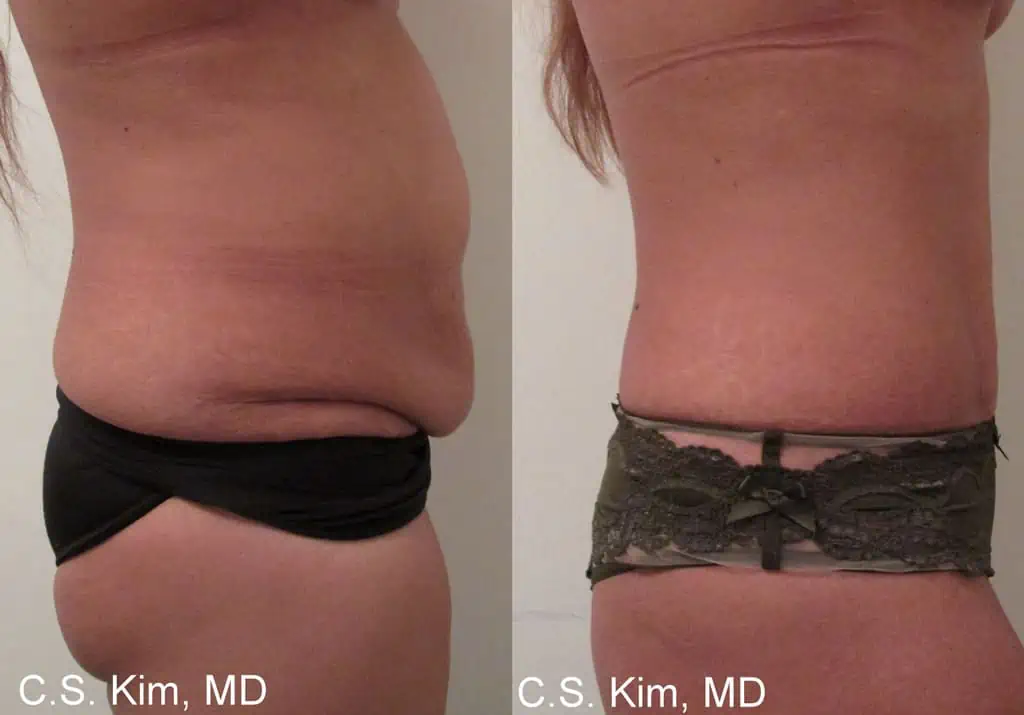
CoolSculpting works by freezing fat cells beneath the skin. Your body then processes and eliminates those cells over the following weeks, with most patients seeing final results around the three-to-six month mark. It’s FDA-cleared and has been performed over 14 million times worldwide. For the right candidate — someone with localized pockets of fat and good skin elasticity — it genuinely delivers.
The catch is that CoolSculpting only addresses fat. It has no effect on loose or sagging skin, and it does nothing for diastasis recti, the muscle separation that’s extremely common after pregnancy. If your concern is a soft lower belly pouch with decent skin tone, CoolSculpting is a reasonable conversation to have. If you have loose skin that folds or creases, or if your stomach protrudes because of separated muscles underneath, CoolSculpting will not solve the problem — and a provider who tells you otherwise isn’t being straight with you.
It’s also worth knowing that noninvasive fat reduction procedures dropped significantly in recent years, largely because they were oversold to patients who weren’t ideal candidates. The technology itself isn’t the issue. The issue is matching it to the right person. That’s why having a board-certified plastic surgeon involved in your non-surgical treatment — not just a med spa aesthetician — makes a meaningful difference. Surgical-level anatomical knowledge changes how these treatments are planned and applied, and it changes the outcome.
One more thing: not all CoolSculpting providers are equal. Older-generation equipment, undertrained staff, and aggressive discounting are all red flags. The quality of the result is directly tied to the quality of the provider.
BodyTite and Radiofrequency: The Middle Ground Between CoolSculpting and Surgery
If CoolSculpting is too limited but surgery feels like too big a step, there’s a meaningful option in between — and it’s one that most people haven’t heard of yet. BodyTite uses radiofrequency energy delivered through a minimally invasive approach to simultaneously reduce fat and tighten skin. It’s not completely non-invasive, but the recovery is far shorter than a full tummy tuck, and it addresses something CoolSculpting simply can’t: skin laxity.
For patients with mild-to-moderate loose skin and stubborn fat — the kind of combination that’s common after weight loss, after pregnancy, or as a natural part of aging — BodyTite fills a real gap in the treatment spectrum. Results develop gradually as collagen remodeling continues over several months, and most patients find the improvement meaningful enough that surgery isn’t necessary.
We’ve invested significantly in BodyTite as part of our practice because we kept seeing the same scenario: patients who needed more than CoolSculpting could offer but weren’t ready for, or didn’t need, a full surgical procedure. BodyTite gives us a credible answer for that group. Combination approaches — pairing fat reduction with skin tightening — tend to produce more comprehensive results than any single non-surgical modality on its own.
For patients who’ve lost weight through GLP-1 medications like Ozempic or Wegovy, this is a particularly relevant option. Significant weight loss often leaves loose abdominal skin behind, and that’s a structural issue that fat-freezing alone won’t address. Depending on how much laxity is present, BodyTite may be sufficient — or surgery may be the more honest recommendation. Either way, the conversation starts with a real assessment of what’s actually going on, not a sales pitch for any one treatment.
When Surgery Is the Right Answer: Tummy Tuck Candidacy in Fairfield County
Some patients come in hoping to avoid surgery and leave with a non-surgical plan that works well for them. Others come in with the same hope and, after an honest assessment, realize that surgery is the only path to the result they’re actually after. Neither outcome is a failure — it’s just accurate information.
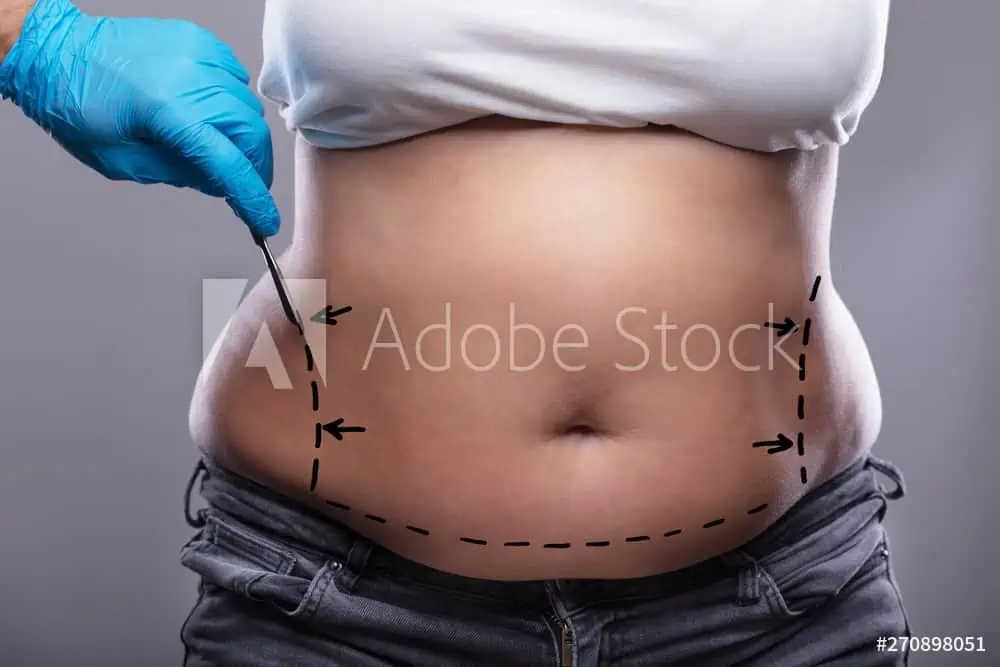
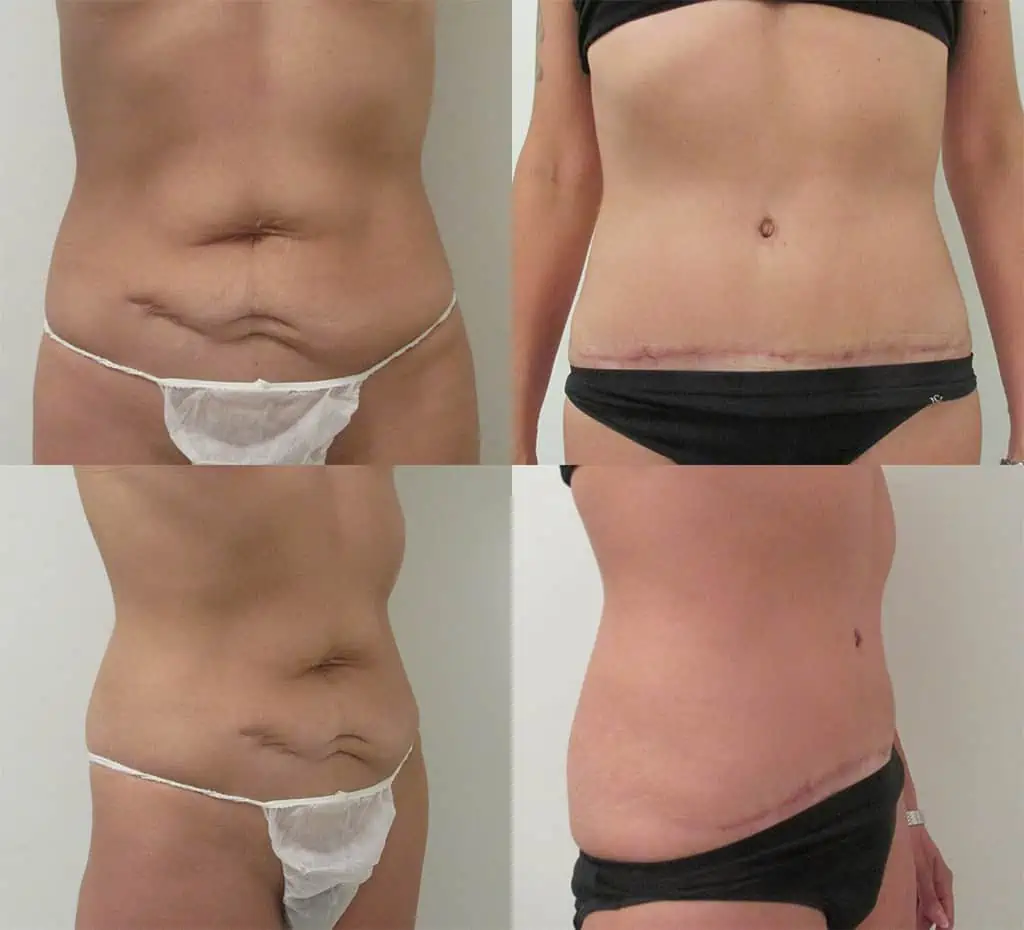
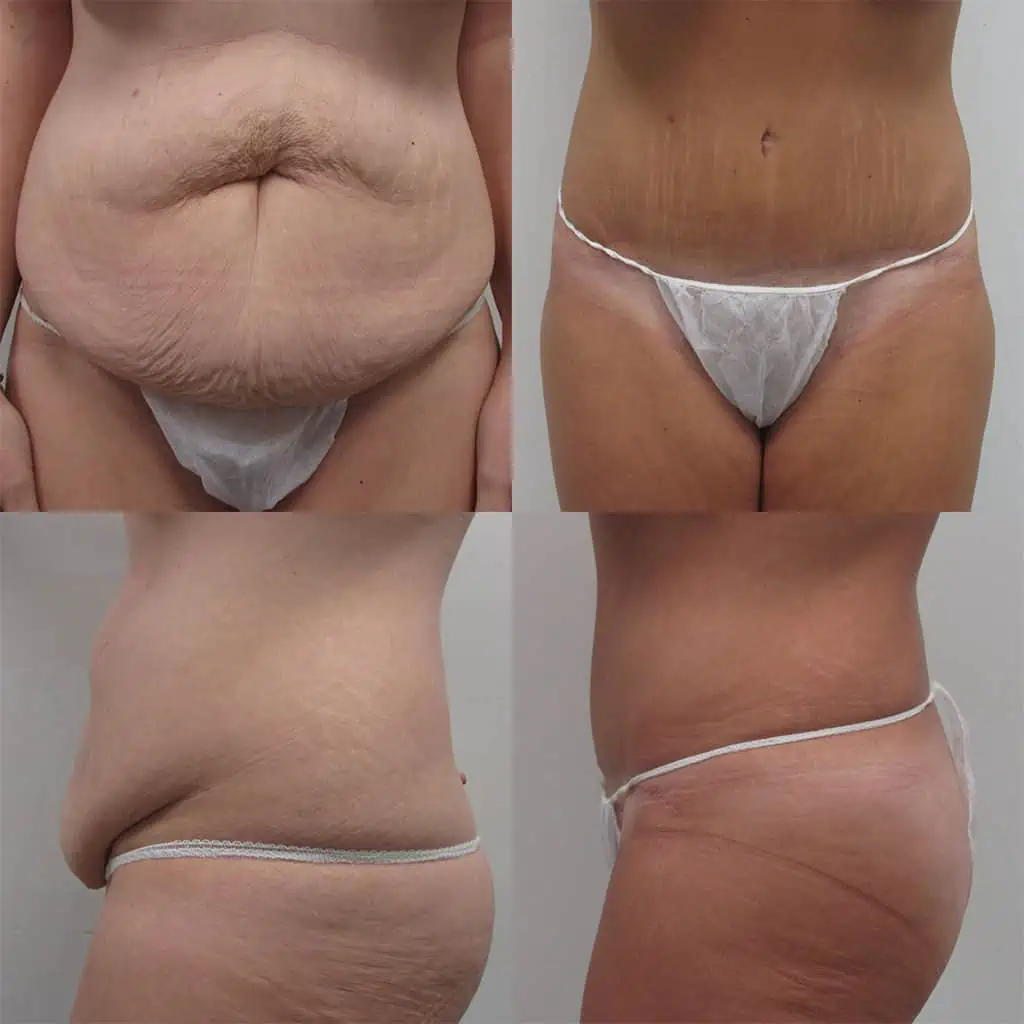
The patients who genuinely benefit from a full abdominoplasty typically have one or more of the following: significant loose skin that doesn’t respond to tightening treatments, diastasis recti (muscle separation) that causes the belly to protrude regardless of body weight, or a combination of fat, skin, and muscle concerns that no single non-surgical treatment can address together. For these patients, surgery isn’t the scary option — it’s the efficient one.
Reverse Tummy Tuck Before and After: Who This Specialized Technique Is Actually For
Most people have heard of a standard tummy tuck, which addresses the lower abdomen and typically involves an incision along the bikini line. Fewer people know about the reverse tummy tuck — also called a reverse abdominoplasty — which targets the upper abdomen specifically, with the incision placed along the bra line or inframammary fold where it stays well hidden.
This procedure is designed for patients whose lower abdomen is relatively flat but who have excess skin or laxity above the belly button. It’s a pattern that shows up fairly often in patients who’ve had a previous lower tummy tuck, patients who’ve undergone weight loss surgery, or patients whose skin has relaxed in the upper midsection due to aging or significant weight fluctuation. The reverse tummy tuck addresses that specific concern directly, without touching the areas that don’t need intervention.
Recovery typically runs one to two weeks, which is shorter than a full abdominoplasty, and candidates should be at a stable weight before proceeding. Before-and-after results for this procedure can look dramatic precisely because the upper abdominal area is often overlooked — patients who’ve been focused on their lower belly for years are sometimes surprised to realize the upper portion was contributing significantly to how their midsection looked overall.
We perform this procedure for patients throughout Fairfield County, CT — including those coming from Greenwich, Westport, Darien, and New Canaan — and it’s worth raising in your consultation if you’ve ever felt that your upper stomach looks different from your lower stomach, or if previous treatments have improved one area while leaving another unaddressed.
FAQs: What Fairfield County Patients Ask Before Booking a Body Contouring Consultation
**Can CoolSculpting tighten loose skin after pregnancy or weight loss?** No — and this is probably the most common misconception we address. CoolSculpting eliminates fat cells; it has no skin-tightening effect. If loose or crepey skin is part of what bothers you, CoolSculpting alone will not fix it. Depending on the degree of laxity, you’d be looking at radiofrequency treatments like BodyTite, or in more significant cases, a surgical tummy tuck. The right answer depends on an actual assessment of your skin elasticity and how much laxity is present.
**How do I know if I’m a candidate for non-surgical body contouring or if I need surgery?** The short answer: it comes down to what’s causing the problem. Fat that sits beneath skin with decent elasticity responds well to non-surgical treatments. Loose skin, muscle separation, or a combination of all three typically requires surgery for meaningful improvement. A good consultation — with a provider who has no financial stake in steering you one way or the other — is the most reliable way to find out. We see patients from throughout Fairfield County, CT for exactly this kind of honest assessment, including many who come in expecting to need surgery and leave with a non-surgical plan, and vice versa.
**Does a non-surgical tummy tuck require multiple sessions?** Most non-surgical body contouring treatments do require more than one session to reach the desired outcome, and results develop gradually over several months as the body responds to treatment. This is different from surgery, where the result is largely established during the procedure itself. Neither timeline is inherently better — it depends on your goals, your schedule, and how much change you’re looking for.
**What about non-surgical blepharoplasty — can the same logic apply to the eyes?** It can, and it’s a question worth asking. Just as patients can choose between non-surgical and surgical approaches for the abdomen, the same framework applies to the eyelids. Non-surgical blepharoplasty options — including radiofrequency treatments like FaceTite — can address mild-to-moderate eyelid laxity without surgery, with subtler results and no downtime. For more significant skin excess, surgical blepharoplasty delivers more complete correction. We offer both, and the decision process is the same: an honest look at what’s present, and a recommendation based on what will actually work.
**I’ve already tried CoolSculpting and wasn’t happy with the results. Is surgery my only option now?** Not necessarily. A lot depends on what you were trying to address and whether CoolSculpting was the right tool for it in the first place. If fat reduction was the goal and the treatment was performed correctly, surgery may indeed offer a more reliable result. But if skin laxity was part of the picture from the beginning, BodyTite or a similar radiofrequency approach might be the missing piece — not surgery. We’d rather spend thirty minutes understanding your history than assume.
Finding the Right Body Contouring Option in Fairfield County, CT
The decision between non-surgical body contouring and surgery isn’t about which option is better in the abstract. It’s about which one is right for what your body actually needs. CoolSculpting works for the right candidate. BodyTite fills a genuine gap for patients who need more than fat reduction but aren’t ready for surgery. And a tummy tuck — whether standard or reverse — delivers results that no non-surgical treatment can replicate when the situation calls for it.
What matters most is getting an honest read on where you fall. Not a consultation designed to sell you the most expensive option, and not one that avoids the surgery conversation when surgery is genuinely the better answer.
If you’re in Fairfield County and you’ve been going back and forth on this, we’re a straightforward place to start. Board-certified, Yale-trained, and experienced across the full spectrum of surgical and non-surgical body contouring — we’ll tell you what we actually think, not what you want to hear.