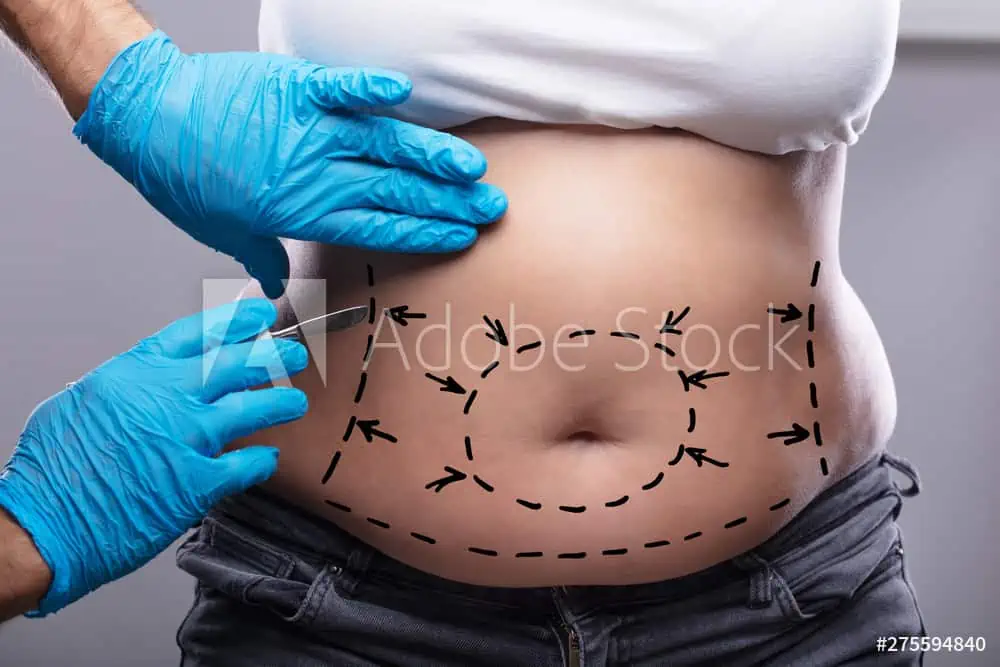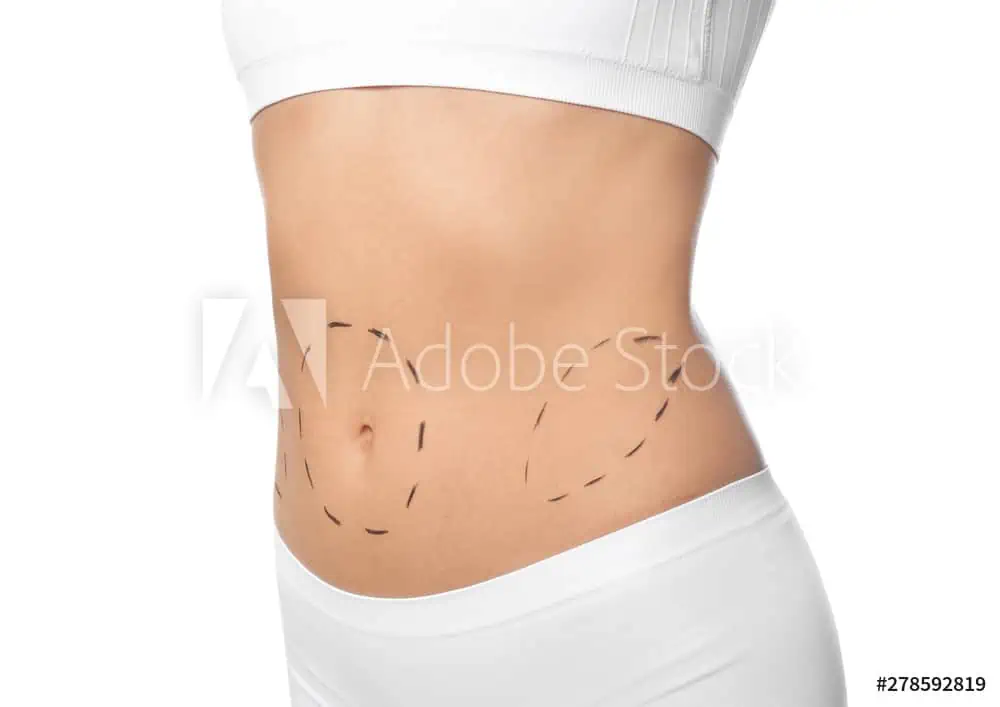
If you’ve been eating well, staying active, and still staring at the same stubborn area in the mirror — you’re not alone, and you’re not doing anything wrong. That frustration is exactly what leads most people in Fairfield County to start researching liposuction. But there’s a gap between what people expect liposuction to do and what it actually does, and that gap is where disappointment lives. This page exists to close it. By the time you’re done reading, you’ll know whether liposuction makes sense for your goals, what the recovery actually looks like, and what honest candidacy means — so you can make a real decision, not a hopeful one.
What Liposuction Actually Does (And What It Doesn’t)
Liposuction is a body contouring procedure, not a weight loss tool. We permanently remove fat cells from specific areas — the abdomen, flanks, inner thighs, arms, under the chin — but the amount removed typically falls between one and five liters, which doesn’t translate into dramatic changes on a scale. Your silhouette can look meaningfully different while the number on your scale barely moves. That’s not a flaw in the procedure. That’s exactly how it’s designed to work.
Think of it this way: your body is roughly 60 to 70 percent water. Fat is a real but relatively small percentage of your total body composition. Removing it reshapes proportion — it doesn’t subtract mass the way most people imagine. The patients who walk away most satisfied are the ones who came in wanting to look better in their clothes, not the ones who came in hoping to drop 20 pounds.
Liposuction vs. Weight Loss Surgery: What’s the Actual Difference?
Weight loss surgery — procedures like gastric bypass or sleeve gastrectomy — works by changing how your digestive system functions. It reduces how much you can eat, alters hunger hormones, and produces significant, measurable weight loss over time. It’s a metabolic intervention, and it’s designed for patients whose weight itself poses a serious health risk.
Liposuction does none of that. It doesn’t change your appetite, your metabolism, or how your body processes food. What it does is physically remove localized fat deposits that have proven resistant to diet and exercise — the kind that seem genetically fixed no matter how consistently you train or how carefully you eat. If you’ve lost weight and gotten to a stable, healthy place but still have specific areas that won’t respond, that’s the scenario we built liposuction for.
The distinction matters because it shapes who’s actually a good candidate. Liposuction works best when your weight is already stable — ideally within roughly 20 to 30 pounds of your goal — and the issue is shape, not size. Patients who are significantly overweight and hoping liposuction will serve as a starting point for a larger transformation are usually advised to focus on weight loss first. Not because the conversation is over, but because results are safer, more predictable, and more satisfying when we use the procedure at the right stage of someone’s journey.
It’s also worth naming the misconception that liposuction results are temporary. The fat cells we remove during the procedure are gone permanently — they don’t grow back. Remaining fat cells in other areas of the body can still enlarge if you gain weight after surgery, which is why the patients who maintain their results best are the ones who treat liposuction as a refinement to an already healthy lifestyle, not a replacement for one.
One more thing worth clearing up: liposuction doesn’t treat cellulite. Cellulite is caused by fibrous bands pulling the skin downward — it’s a structural issue, not a fat volume issue. Liposuction addresses volume, not texture. If cellulite is a primary concern, that’s a separate conversation about different treatment options.
Liposuction Before and After Results in Obese Patients: What to Realistically Expect
This is one of the most searched questions in this space, and it deserves a straight answer rather than a runaround. If your BMI is above 35 or 40, Dr. Kim will have an honest conversation with you about whether liposuction is the right next step or whether pursuing weight loss first would give you better, safer outcomes.
That’s not a rejection. It’s the kind of guidance that protects you. Liposuction performed on patients who are significantly above their stable weight carries higher surgical risk, and the results are harder to predict because the body’s composition continues to change as weight fluctuates. The procedure works best when it’s refining a body that’s already close to where it wants to be.
For patients in Fairfield County who are overweight but not significantly so — say, 20 to 30 pounds above their goal weight — candidacy is evaluated on a case-by-case basis. Factors like skin elasticity, fat distribution, overall health, and realistic expectations all factor into whether liposuction makes sense right now or whether a different approach would serve you better. Some patients in this range are excellent candidates. Others benefit more from a staged plan.
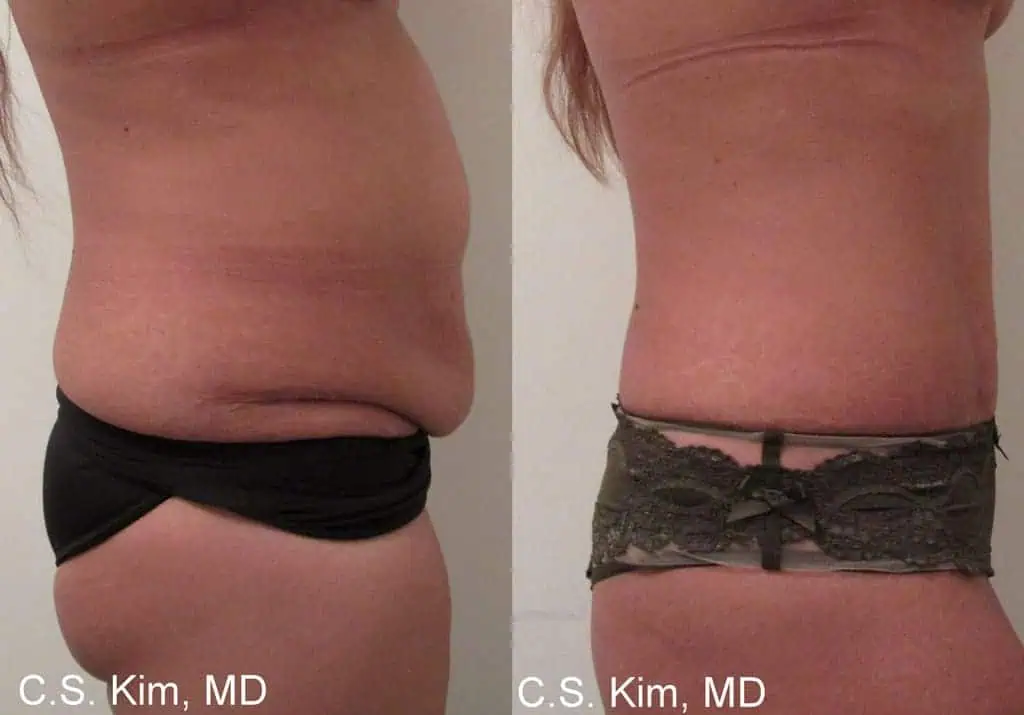
What the before-and-after photos don’t always show is that the best liposuction results come from the combination of a qualified surgeon, appropriate candidacy, and a patient who understands what they’re signing up for. Our consultations are built around that education. If you come in expecting one thing and the honest answer is something different, you’ll hear that clearly — because the alternative, which is a patient who proceeds with misaligned expectations, serves no one well.
Liposuction Downtime: What Recovery Actually Looks Like
Recovery is where most people’s expectations drift furthest from reality. The idea that you’ll be back to normal in a few days is one of the most persistent myths in this space, and it leads to real frustration when the actual experience doesn’t match it. Patients in Fairfield County tend to have demanding schedules — professional obligations, social commitments, kids, all of it — and planning your recovery accurately is what makes the process manageable rather than stressful.
The general framework: most patients return to desk work within one to two weeks. Strenuous exercise — tennis, golf, the gym — is typically off the table for four to six weeks. Full results don’t appear until three to six months post-procedure, because swelling takes time to fully resolve. Some residual swelling can linger for up to a year.
The First Few Weeks After Liposuction: What “Swell Hell” Means and Why It Happens
The first one to three weeks after liposuction are colloquially called “swell hell” by patients who’ve been through it, and the name is accurate. Treated areas often look larger immediately after surgery than they did before, because the body’s inflammatory response causes significant fluid retention. This is normal, expected, and temporary — but it catches a lot of patients off guard if no one warned them.
During this period, you’ll be wearing compression garments around the clock. These aren’t optional. They reduce swelling, support the healing tissue, and help your skin conform to its new contours as the underlying structure settles. Most patients wear them for several weeks, transitioning from full-time to part-time wear as healing progresses. For patients in Fairfield County’s colder months — which conveniently align with the January-through-April peak consultation window — compression garments are easy to conceal under winter clothing, which is one reason many patients strategically time their procedures for fall or winter.
By weeks three to four, swelling begins to subside noticeably and you’ll start to see the early shape of your results. By six to eight weeks, most patients feel comfortable returning to their full activity level.
Planning Your Liposuction Recovery Around Life in Fairfield County
Timing matters, and it’s worth thinking through before you book anything. If you’re in Greenwich, Westport, Darien, or anywhere along the shoreline, you probably have a summer social calendar that starts ramping up around Memorial Day. That means a January or February procedure gives you the full three-to-six-month window to heal and see results before beach season — which is exactly why we see our highest consultation volume in the early months of the year.
If you’re working in Stamford’s financial district or commuting into Manhattan, the desk-work-in-two-weeks timeline is realistic. What’s less realistic is thinking you’ll be back at the gym or on the golf course before the six-week mark. That’s the window where patients sometimes push too hard and extend their recovery unnecessarily. Building in that buffer — telling your schedule the truth about what you need — is what makes the whole process go smoothly.
For patients with significant social or professional visibility in Fairfield County’s tight-knit communities, discretion is also part of the planning conversation. Compression garments under clothing, a cover story for a week or two of lighter activity, and a clear sense of when you’ll look and feel like yourself again — these are the practical details we walk through during consultation, because they’re the details that actually affect your life. The clinical part of recovery is straightforward. The life-planning part is where good preparation pays off.
Dr. Kim’s affiliation with Stamford Hospital adds another layer of reassurance for patients who want to know their surgeon is credentialed beyond a private practice setting. Hospital privileges require peer review and ongoing credentialing — it’s an accountability standard that not every cosmetic surgeon in the county meets.
Is Liposuction Right for You? How to Know Before You Book a Consultation
If you’re at a stable, healthy weight, have specific areas that haven’t responded to diet and exercise, and you’re looking for a refinement rather than a transformation — liposuction is worth a serious conversation. If you’re hoping it will serve as a weight loss shortcut, the honest answer is that it won’t, and any surgeon worth trusting will tell you that directly.
The right next step is a consultation where your goals, your candidacy, and your realistic options are laid out plainly. Not a sales pitch. A conversation. That’s what we try to deliver at every first appointment — the information you need to make a decision that’s actually right for you, even if that decision is to wait, lose some weight first, or explore a different approach entirely.
If you’re in Fairfield County and ready to have that conversation, Dr. CS Kim Plastic Surgery is located at 2777 Summer Street, Suite 210 in Stamford — accessible from Greenwich, Westport, Darien, Norwalk, and across the county. Reach out to schedule a consultation and find out where you actually stand.