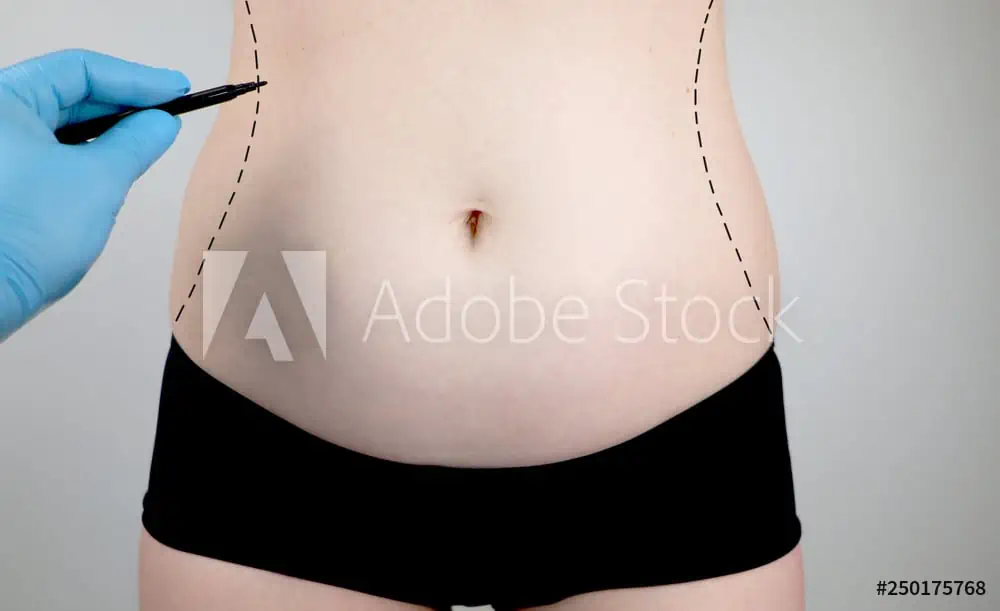
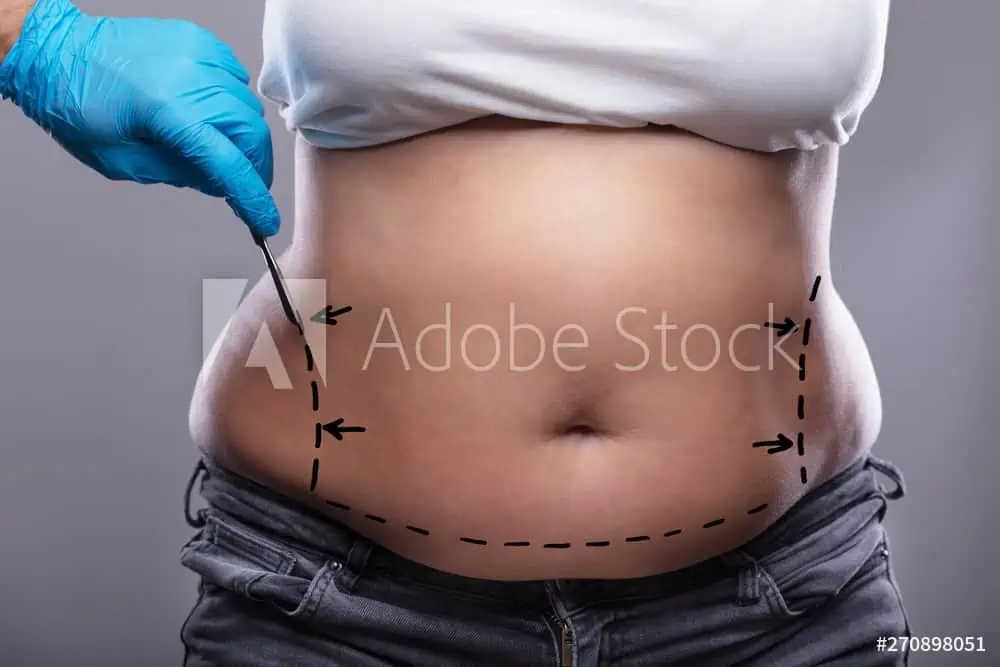
You’ve spent time in the gym. You’ve watched what you eat. And yet, there’s still something about your midsection that no amount of effort seems to touch. If that sounds familiar, you’re not alone — and you’ve probably already started looking at tummy tuck before and after results online, trying to figure out what’s realistic and what’s just good photography.
Here’s the thing: most before-and-after galleries don’t come with instructions. They show you a result, but they don’t tell you how to read it. This page does. We’ll walk you through what great outcomes actually look like, what to watch out for, and what questions are worth asking before you ever sit down for a consultation.
What to Look for in Tummy Tuck Before and After Pics
A before-and-after photo is only as useful as your ability to evaluate it. The most important thing to understand is that dramatic doesn’t always mean good. A result that looks striking in a photo taken under perfect lighting, at the most flattering angle, a year post-surgery, tells a very different story than what a patient sees six weeks after their procedure.
Start with the scar. In a well-executed tummy tuck, the incision sits low enough to be hidden by standard underwear or a swimsuit bottom. If the scar rides high — toward the belly button or above the hip line — that’s a sign of poor surgical planning, not just healing variation. For our patients along the Fairfield County shoreline who spend summers at Compo Beach in Westport or the Greenwich shore clubs, this detail matters practically, not just aesthetically.
Next, look at the belly button. It sounds like a small thing, but the navel is one of the most scrutinized elements of any tummy tuck result. A skilled surgeon creates a belly button that looks like it belongs — naturally shaped, properly positioned, without visible distortion or scarring around it. A belly button that looks round, pasted on, or oddly placed is one of the clearest signs that technique fell short.
Finally, check the photos for consistency. Same angle, similar lighting, comparable clothing. Inconsistent photography — one photo taken straight-on, the other at a flattering three-quarter angle — makes it nearly impossible to evaluate the actual result. We present our galleries honestly, because our outcomes hold up under fair comparison.
Diastasis Recti Before and After Tummy Tuck: What Post-Pregnancy Results Should Show
If you’ve had children and your abdomen has never quite returned to normal — even after losing the baby weight — there’s a good chance diastasis recti is part of the picture. It’s more common than most people realize. Up to 60 to 66 percent of women who have given birth experience some degree of abdominal muscle separation, and a gap greater than roughly two finger-widths is considered clinically significant.
The frustrating part is that exercise alone can’t fully close that gap. Core workouts can strengthen the surrounding muscles, but they can’t suture separated tissue back together. That’s what a tummy tuck with muscle plication does — we physically repair the midline, pulling the abdominal muscles back into alignment and securing them there.
When you’re evaluating diastasis recti before and after tummy tuck photos, you’re looking for more than a flatter stomach. You want to see a natural abdominal contour even at rest — not just when the patient is standing upright in the most favorable position. The profile view is especially telling. A well-repaired diastasis should eliminate the characteristic forward bulge that makes the abdomen look rounded or protruding even when body weight is healthy.
We address diastasis recti as a standard part of our abdominoplasty approach. For the many post-pregnancy patients we see from communities like Darien, New Canaan, Westport, and Greenwich — towns with a high concentration of young families — this is often the central concern. They’re not just looking for a cosmetic improvement. They want their core to function the way it did before pregnancy, and they want their midsection to reflect the effort they’ve already put in.
The functional side of this is worth taking seriously. Repairing separated abdominal muscles can reduce chronic lower back pain, improve posture, and in some cases address stress urinary incontinence — all of which are real quality-of-life improvements that go well beyond appearance. Before-and-after photos can show you the aesthetic outcome, but the full benefit of diastasis repair often isn’t visible in a photo at all.
Tummy Tuck Before and After for Patients with Higher BMI: What Realistic Results Look Like
One of the most common questions we hear — and one that’s rarely answered honestly in most online galleries — is whether a tummy tuck is an option for patients who aren’t at their ideal weight. The short answer is that candidacy is more nuanced than a number on a scale.
What matters most is stability. A patient who has reached a weight they can realistically maintain is a far better surgical candidate than someone who is still actively losing weight, regardless of where that stable weight falls on a BMI chart. Performing a tummy tuck while weight is still fluctuating risks compromising the result — either because additional fat loss will leave new excess skin, or because weight regain will stretch the repaired tissues.
For patients who have lost significant weight — whether through lifestyle changes, bariatric surgery, or more recently through GLP-1 medications like semaglutide — the challenge is typically excess skin rather than excess fat. The ASPS noted in its 2024 procedural statistics that tummy tucks remained a top procedure specifically because of the growing number of patients using weight loss medications, who are left with loose, sagging abdominal skin that no amount of exercise can address. This is an increasingly common situation, and we’re well-equipped to evaluate it.
When reviewing tummy tuck before and after photos for higher-BMI or post-weight-loss patients, look for results that show genuine skin removal and contour improvement — not just a reduction in volume. The abdominal profile should look smoother and more defined, the skin should appear taut rather than gathered, and the waistline should show real improvement in shape. A result that looks good only from the front but shows excess skin at the sides or flanks suggests the procedure wasn’t comprehensive enough for that patient’s anatomy.
It’s also worth knowing that in some cases, a staged approach makes more sense — addressing weight loss first, then proceeding with surgical body contouring once weight is stable. That’s a conversation worth having during a consultation, not something to try to determine from a photo gallery alone. If you’re in Fairfield County and unsure whether you’re at the right point in your journey, the best step is simply to come in and talk through it.
How to Identify a Skilled Tummy Tuck Surgeon in Fairfield County
Living in Fairfield County means you have access to a wide range of plastic surgeons — local and in nearby Manhattan. That’s an advantage, but it also means there’s more to sort through. The most important baseline is board certification by the American Board of Plastic Surgery, which is the only board recognized by the American Board of Medical Specialties for this specialty. Not every surgeon who markets cosmetic procedures holds this credential, and it matters.
Beyond certification, experience volume is worth asking about directly. A surgeon who performs tummy tucks regularly — not occasionally — has seen the full range of anatomical variation and knows how to adapt their technique accordingly. I’m a Yale School of Medicine graduate with more than 30 years of experience performing abdominoplasties in Fairfield County, and an ASPS member affiliated with Stamford Hospital. That depth of surgical experience directly affects outcomes.
What Makes a Tummy Tuck Result Look Natural — Not Surgical
The fear of looking “done” is one of the most consistent concerns we hear from patients considering a tummy tuck. They want to look like themselves — just the version of themselves that feels right. That’s a reasonable goal, and it’s achievable, but it requires both the right technique and the right expectations going in.
A natural-looking tummy tuck result comes down to a few things working together. The scar should be low and well-placed, as discussed. The belly button should look like it belongs. The waistline should show a smooth, gradual contour — not an abrupt transition between treated and untreated areas. And the overall silhouette should look proportionate, not artificially tight or stretched.
One technical factor that significantly affects the quality of contouring is whether liposuction is incorporated into the procedure. A tummy tuck without liposuction can produce a flatter stomach, but it often leaves the waist looking square or boxy rather than defined. We perform lipo-abdominoplasty — simultaneous liposuction of the central abdomen using a technique that preserves blood flow to the abdominal flap — which produces a thinner, more naturally contoured result than a standard tummy tuck alone. Most surgeons don’t use this approach. We’ve performed hundreds of lipo-abdominoplasties, and the difference in outcome quality is visible in the results.
When you’re looking at before-and-after photos, pay attention to the waistline, not just the front view. A result that looks dramatically flatter from the front but shows little change in the waist or flanks suggests liposuction wasn’t part of the plan. The best outcomes show improvement from every angle — and that’s what you should be looking for when evaluating any surgeon’s gallery.
How Long Until Tummy Tuck Results Are Final — and What to Expect Along the Way
This is one of the most frequently asked questions we hear, and one of the most underexplained topics in most online galleries. The answer is that tummy tuck results continue to evolve for up to 12 months after surgery — and sometimes longer. What you see at six weeks is not what you’ll see at six months.
In the early weeks post-surgery, swelling, bruising, and the compression garment all obscure the final result. Many patients feel anxious during this period because the outcome doesn’t match what they expected to see. That’s completely normal, and it’s why the timing of before-and-after photos matters so much. An “after” photo taken at eight weeks looks very different from one taken at a year, and we note when our photos were taken for exactly this reason.
Scars also continue to mature over time. A fresh tummy tuck scar will be more visible in the first several months — it may appear pink, raised, or firm. By the 12-month mark, most scars have faded significantly and softened in texture. Proper scar care, including silicone sheeting and sun protection, plays a meaningful role in how the final scar looks.
For our Fairfield County patients planning around their lifestyle — whether that’s a summer at the beach in Westport, a busy fall social calendar in Greenwich, or simply returning to work and daily routines — understanding the recovery and results timeline is essential to planning the right time for surgery. Most patients can return to light activity and desk work within one to two weeks. Full activity, including exercise, typically resumes around four to six weeks. The final result, though, is worth waiting for — and tummy tuck consistently earns one of the highest “worth it” ratings of any cosmetic procedure, with 95 percent of RealSelf reviewers saying they’d do it again.
Ready to Evaluate Real Tummy Tuck Results in Fairfield County, CT?
Looking at before-and-after photos is a starting point, not a finish line. The real evaluation happens in a consultation — when you can ask specific questions, discuss your anatomy, and get an honest assessment of what’s possible for your body and your goals.
The most important takeaways from this page: look at scar placement, belly button quality, waist contour, and photo consistency. Understand that final results take time. Know that diastasis recti repair is part of a well-executed tummy tuck for post-pregnancy patients, and that higher-BMI and post-weight-loss patients have real options worth exploring. And make sure any surgeon you’re seriously considering is board-certified by the American Board of Plastic Surgery.
If you’re in Fairfield County — whether you’re in Stamford, Darien, Westport, Greenwich, or anywhere in between — and you’re ready to have that conversation, we’re here. Reach out to our Stamford office at 203-920-1444 to schedule a consultation and see our full before-and-after gallery in person.