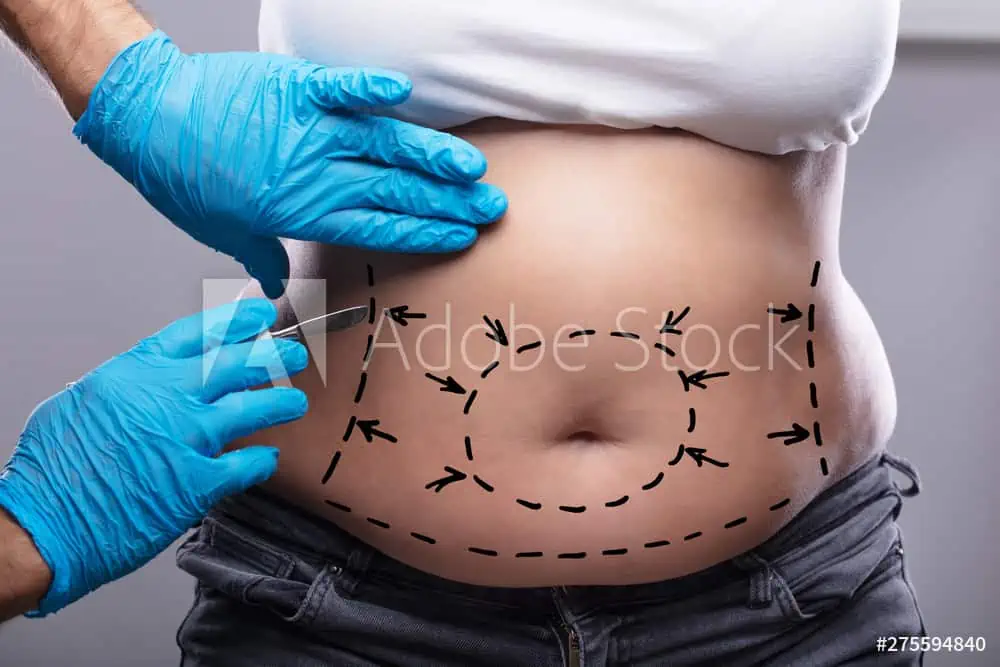
The cost of plastic surgery stops a lot of people before they ever book a consultation. Not because they can’t make it work — but because they don’t know where to start. Medical credit cards, installment loans, deferred interest, soft credit checks — it’s a lot of terminology for something that should be straightforward.
If you’re in Fairfield County and exploring a procedure like liposuction, a tummy tuck, or body contouring, this guide is for you. We’ll walk through the main financing options available, what to expect when you apply, and how to think about the real cost of a procedure in this market — so you can make a decision based on facts, not uncertainty.
Plastic Surgery Monthly Payment Plans Explained
Most plastic surgery procedures are elective, which means insurance won’t cover them. That puts the full cost on you — and in a market like Fairfield County, that number is typically higher than what you’d see quoted nationally. A body contouring procedure that averages $8,000 elsewhere can run $12,000 to $18,000 or more in the Stamford and Greenwich area, simply because overhead, facility costs, and surgeon demand are higher here.
Monthly payment plans exist to bridge that gap. Instead of paying the full amount upfront, you finance the procedure through a third-party lender or medical credit program and repay it in fixed installments over time. The monthly amount depends on the total cost, your loan term, and your interest rate — but for many patients, a $12,000 procedure becomes something closer to $350 to $500 per month over 24 to 36 months. That’s a very different conversation than writing a single large check.
Get a Loan for Plastic Surgery: Which Programs Are Worth Knowing
There are a few financing programs that come up consistently in plastic surgery, and they’re not all the same. Understanding the difference matters before you apply.
CareCredit is probably the most recognized name in medical financing. It’s a revolving credit card issued by Synchrony Bank, accepted at more than 285,000 healthcare locations nationwide. The appeal is the promotional 0% APR period — typically 6, 12, 18, or 24 months — which means if you pay off the full balance before the promotion ends, you pay no interest at all. The catch is that CareCredit uses deferred interest, not true 0% financing. If there’s any remaining balance when the promotional period closes, interest gets charged retroactively from the original purchase date. It’s an important distinction that doesn’t always get explained clearly.
Alphaeon Credit works similarly — it’s a credit card designed specifically for cosmetic and aesthetic procedures. Like CareCredit, it offers promotional financing periods and is worth considering if you have a strong credit profile and a clear plan to pay off the balance within the promotional window.
PatientFi operates differently. Rather than a revolving credit card, it provides fixed monthly installment loans tied to a specific procedure. You know your rate, your monthly payment, and your payoff date from day one. PatientFi approves up to $50,000, decisions are often instant, and they use a soft credit check for pre-qualification — meaning you can see your options without any impact to your credit score. For patients who want predictability over flexibility, this is often the cleaner option.
Beyond these, you can also apply for an unsecured personal loan through a bank or online lender. As of early 2026, the average rate on unsecured personal loans sits around 12.27%. These loans aren’t specific to healthcare, but they work the same way — fixed rate, fixed term, predictable payments. If you have strong credit and want to shop rates independently, this is a legitimate path.
What Credit Score Do You Need to Finance Plastic Surgery?
The honest answer is that it depends on which program you’re applying for. Most of the major medical financing platforms — CareCredit, Alphaeon, PatientFi — look for a credit score of 670 or higher to qualify for their better terms. If your score is in that range or above, you’ll generally have access to promotional periods, competitive APRs, and higher approval amounts.
That said, a score below 670 doesn’t automatically close every door. Some programs have tiered approval structures, and in-house financing options at certain practices may have more flexibility than a bank or national credit card issuer would. The key is knowing what you’re walking into before you apply — which is exactly why soft-pull pre-qualification matters. PatientFi, for example, lets you check your rate and estimated monthly payment without triggering a hard inquiry. You find out where you stand without any downside.
One thing worth knowing: applying to multiple financing programs in a short window can affect your credit if those applications involve hard pulls. It’s better to pre-qualify first, understand your options, and then submit a full application for the program that fits. During your consultation at our Stamford practice, we include a conversation about financing — so you’re not doing this research alone or guessing at what might work for your situation.
It’s also worth setting realistic expectations about total cost. The surgeon’s fee is one line item. Anesthesia, facility fees, pre-op labs, and post-operative supplies add to the total. When you’re evaluating monthly payment amounts, make sure you’re financing the full picture — not just the number that appeared in the initial quote.
Medical Financing for Cosmetic Surgery: Your Options in Fairfield County
Fairfield County is one of the wealthiest counties in the country. That context matters when we talk about financing, because the conversation here is different than it is in most markets. Many patients who ask about monthly payment plans aren’t doing so because they can’t afford the procedure — they’re doing it because they’d rather preserve their liquidity, keep their savings intact, or simply budget more comfortably over time.
Financing a procedure is a financial strategy. It’s how plenty of people in Greenwich, Westport, Darien, and New Canaan approach large elective expenses — the same way they’d think about any significant investment. The goal is to get the outcome you want without disrupting your financial picture to do it.
How the Application Process Actually Works
Most patients are surprised by how fast the financing process moves. With platforms like PatientFi, you can pre-qualify online in minutes, get an instant decision, and know your monthly payment amount before you’ve even scheduled your procedure. There’s no commitment required at the pre-qualification stage — you’re just gathering information.
If you move forward with a full application, approval timelines are typically the same day. Once approved, financing is usually confirmed and in place two to three weeks before your procedure date, which is the standard window most surgical practices require for payment to be settled before surgery. You don’t need to have everything figured out before your first consultation — in fact, the consultation is the right time to work through it.
When you come in to meet with us at our Stamford office, the financial conversation is part of the process. We can walk you through what your procedure is likely to cost in total — not just the surgeon’s fee — and help you connect with financing options that make sense for your situation. Our team has fielded these questions many times, and there’s nothing awkward about asking. Most patients do.
One practical note: if you’re considering a 0% promotional financing period through CareCredit or Alphaeon, go in with a repayment plan already in mind. Know the length of your promotional window, divide the balance by the number of months, and make sure that monthly amount is realistic for your budget. If there’s any chance you won’t clear the balance in time, a fixed-rate installment loan with a known APR is often the safer and more predictable choice — even if the headline rate looks less exciting.
Budgeting for Body Contouring and Cosmetic Surgery in Stamford, CT
Body contouring procedures — liposuction, tummy tuck, Brazilian Butt Lift — tend to sit at the higher end of the cosmetic surgery cost range. In Fairfield County, that means you’re realistically budgeting anywhere from $8,000 to $20,000 or more depending on the complexity of the procedure, the facility, and the surgeon’s experience. Board-certified plastic surgeons in this market command higher fees than national averages, and that’s not arbitrary — it reflects training, outcomes, and demand.
When you’re building a budget, it helps to think in layers. The surgeon’s fee is the foundation. Then factor in anesthesia (typically billed separately by the anesthesiologist), the surgical facility fee, any pre-operative testing, and post-operative supplies like compression garments. Once you have a realistic total, you can run the numbers on monthly payments across different loan terms and see what fits.
A useful rough calculation: a $14,000 procedure financed over 36 months at a 12% APR works out to roughly $465 per month. At 24 months, that same loan is closer to $658 per month. Stretching the term reduces the monthly payment but increases the total interest paid — so there’s a trade-off to weigh depending on your priorities.
The GLP-1 weight loss medication wave — Ozempic, Wegovy, Mounjaro — has brought a new group of patients into body contouring consultations across Fairfield County. Significant weight loss often leaves patients with excess skin and areas that don’t respond to exercise, making surgical contouring the logical next step. If that describes your situation, it’s worth knowing that the financing options available to you are the same as for any other elective procedure, and the consultation process will give you a clear picture of what the full investment looks like before you commit to anything.
We serve patients from across Fairfield County — Greenwich, Westport, Norwalk, Darien, New Canaan, Wilton, Ridgefield, Trumbull, Bridgeport, and beyond. Our office is at 2777 Summer Street in Stamford, which puts us within easy reach whether you’re coming from the coast or from further inland. For patients comparing us against Manhattan-based practices, the math on travel time and follow-up care alone often makes the local option the more practical one — and our financing options are fully competitive with anything you’d find in the city.
Help Paying for Cosmetic Surgery: Frequently Asked Questions
**Does CareCredit cover plastic surgery in Fairfield County, CT?** Yes. CareCredit is accepted at thousands of practices nationwide and covers both surgical and non-surgical cosmetic procedures. If we accept CareCredit at our Stamford practice, it will be confirmed during your consultation — and we can walk you through how the promotional periods work so you understand what you’re signing up for before you apply.
**Will checking my financing options affect my credit score?** Not if you use a soft-pull pre-qualification, which PatientFi and several other platforms offer. You can see your estimated rate and monthly payment without any impact to your credit. A hard inquiry only happens when you submit a full application.
**Is financing available for non-surgical treatments like Botox or fillers?** Some financing programs do cover non-surgical cosmetic treatments, though the minimums and terms vary. It’s worth asking during your consultation — especially if you’re combining surgical and non-surgical procedures, since financing the total can sometimes be more efficient than financing each separately.
**I live in Greenwich and have been comparing practices in Stamford versus Manhattan — does location affect financing options?** Not significantly. The same national financing platforms — CareCredit, PatientFi, Alphaeon — are available regardless of whether you choose a Fairfield County practice or a New York City one. What does differ is the total cost of the procedure, which tends to be higher in Manhattan due to NYC overhead. Choosing a board-certified surgeon in Fairfield County often means a lower total to finance, with the added convenience of local follow-up care and shorter travel times.
**What if I’m not approved for the full amount I need?** It happens, and it’s not the end of the road. Some patients combine a partial financing approval with personal savings to cover the total. Others adjust the scope of their procedure, or revisit financing after improving their credit profile. Our team can help you think through the options during your consultation — there’s usually more flexibility than people expect.
If you’re ready to have an honest conversation about what a procedure costs and how to make it work financially, we’re here for it. Reach out to us and schedule a consultation. The financial part of the process doesn’t have to be the hardest part.