Most people spend months researching the procedure itself — the technique, the surgeon, the before-and-afters. Recovery gets a paragraph, maybe two, somewhere near the bottom of the page. Then surgery happens, and suddenly Week 2 feels nothing like what they imagined.
That gap between expectation and reality is one of the most common things we see. Patients who are well-prepared for the procedure are often completely unprepared for the healing process. This page is here to close that gap — with honest timelines, real milestones, and the kind of practical detail that actually helps you plan your life around recovery.
Plastic Surgery Healing: What’s Actually Happening Inside Your Body
There’s an important distinction that most people miss: healing and recovery are not the same thing. Recovery is when you feel well enough to resume your normal routine. Healing is what your body is doing at the tissue level — and that process continues long after you feel fine.
For most procedures, you’ll feel functional within a few weeks. But internal tissue repair, scar maturation, and residual swelling can take anywhere from three months to a full year to fully resolve. That’s not a complication — it’s just biology. Understanding this distinction is what separates patients who feel frustrated by their results at six weeks from patients who trust the process and see the full outcome at six months.
How Long Does Recovery Take for Common Plastic Surgery Procedures?
The honest answer is: it depends on the procedure — and on you. But here are the realistic benchmarks we share with patients before surgery, not after.
Breast augmentation tends to have one of the shorter recovery windows. Most patients with desk jobs can return to work within three to five days, though heavy lifting and strenuous activity need to wait four to six weeks. You’ll likely feel close to normal fairly quickly, but your body is still healing underneath, and final results typically settle in around two months.
Liposuction is more involved than people expect. Plan on ten to fourteen days before returning to work, and you’ll be wearing a compression garment for four to six weeks. Swelling after liposuction is significant and slow to resolve — final results often aren’t visible until three to six months out. If you’re planning liposuction ahead of summer, booking in January or February gives your body the runway it needs to be fully healed by June.
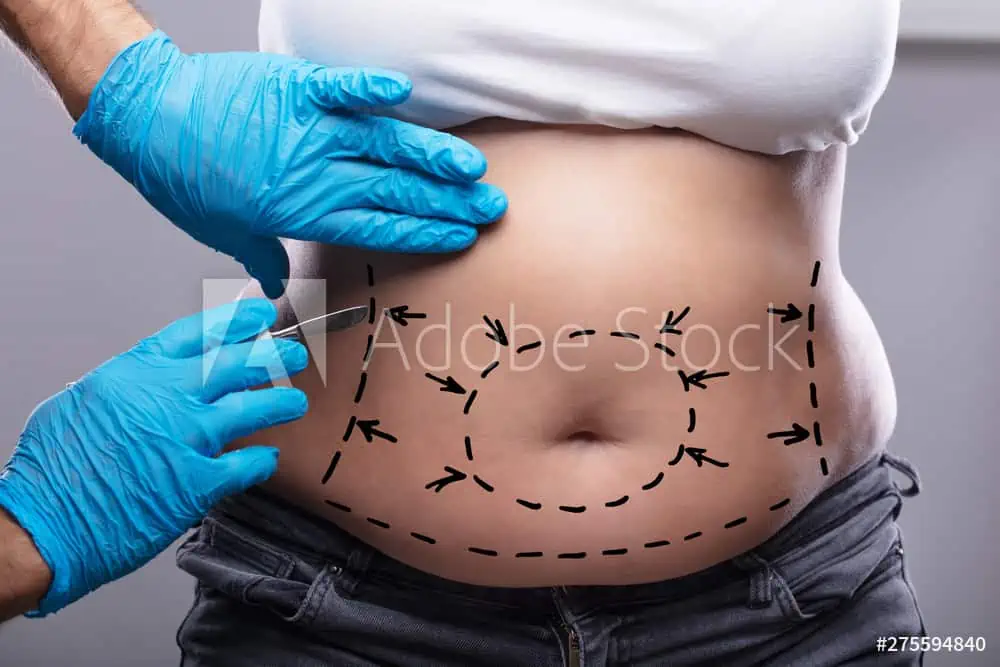
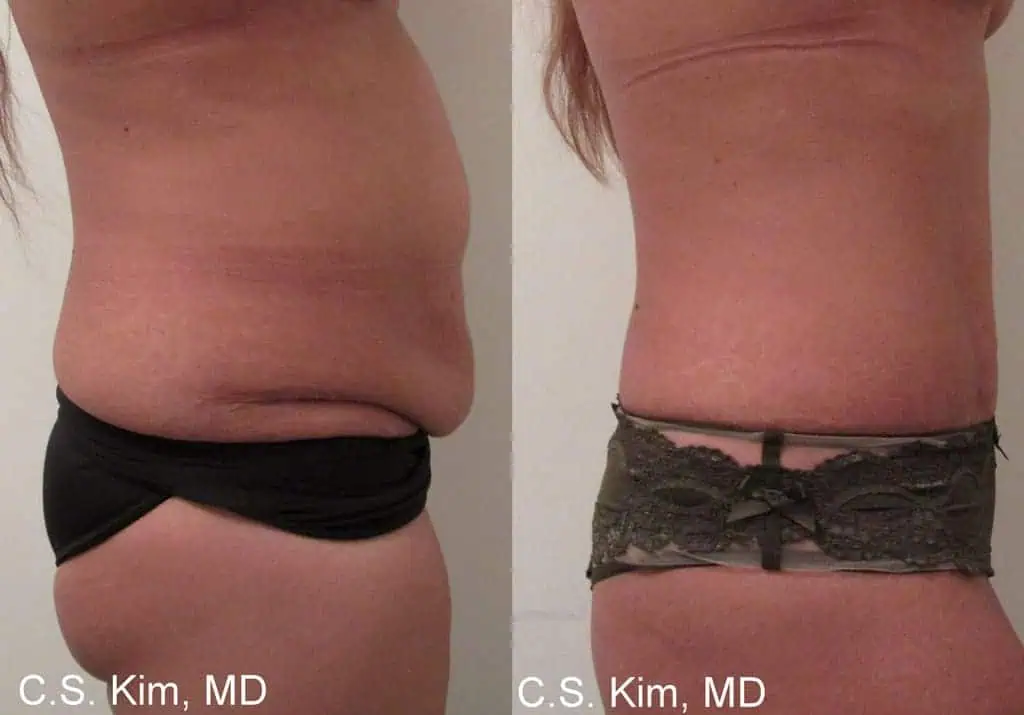
A tummy tuck requires the most patience of the common body contouring procedures. Two to three weeks off work is standard, and full recovery — where you’re back to normal activity without restriction — takes six to eight weeks. Final results, including full scar maturation, can take up to a year. This is a significant procedure, and the recovery reflects that.
Facelift patients are typically back to looking presentable within ten to fourteen days, though most feel they look genuinely great around the three-month mark. Residual swelling and subtle changes continue for up to six months. For patients planning ahead for a holiday gala or a fall event, a September procedure gives you plenty of time to look and feel your best by December.
For a Brazilian Butt Lift, the recovery protocol is uniquely demanding. You’ll need two to three weeks before returning to most daily activities, but the most critical restriction — avoiding direct pressure on the buttocks — lasts six to eight weeks. This affects everything from how you sleep to how you sit at your desk. It’s one of the procedures where recovery planning matters most, and where cutting corners on post-op instructions carries the highest risk.
Driving After Surgery: When Is It Actually Safe to Get Behind the Wheel?
This question comes up in almost every pre-operative consultation, and it matters more in Fairfield County than almost anywhere else. When you live in Westport, Darien, or New Canaan, your car isn’t a luxury — it’s how you get your kids to school, run errands, and manage your day. Losing access to it, even temporarily, requires real planning.
The short answer is that no one should drive immediately after surgery. General anesthesia and sedation impair your reaction time and judgment even after you feel alert — and most post-operative pain medications compound that effect. Beyond the medication issue, many procedures restrict your range of motion in ways that make driving genuinely unsafe. A tummy tuck limits your ability to react quickly. An arm or shoulder procedure affects your steering. Even a facelift, which doesn’t directly involve your limbs, involves enough discomfort and medication in the first week that driving is off the table.
For most procedures, the realistic driving timeline is somewhere between one and two weeks. Breast augmentation patients are often cleared to drive within five to seven days once they’re off prescription pain medication and have full range of motion. Liposuction and tummy tuck patients typically wait closer to two weeks. BBL patients face additional restrictions because of the sitting protocol — even once you’re off pain medication, the no-pressure guideline affects how you can safely position yourself in a driver’s seat.
The practical implication is this: before your surgery date, arrange for someone to cover your transportation needs for at least two weeks. If you rely on Metro-North to commute into the city, plan on working remotely for that window — the commute itself, between the walk to the station, the train, and navigating Grand Central, is more physically demanding than it sounds in the first two weeks post-surgery. Building this into your plan before surgery, not after, makes the recovery significantly less stressful.
Plastic Surgery Complications: What to Watch For and Why Your Surgeon’s Credentials Matter
The overall complication rate for cosmetic surgery is approximately one percent. That’s genuinely low — and it’s a number that reflects what happens when procedures are performed by qualified surgeons in accredited facilities. But one percent isn’t zero, and knowing what to watch for during recovery is part of being a prepared patient.
Most complications, when they occur, are minor — small hematomas, localized swelling, or superficial wound changes that resolve with simple intervention. Serious complications are rare, but they require prompt attention. The difference between a complication that resolves cleanly and one that becomes a bigger problem is almost always how quickly it’s identified and addressed.
Warning Signs You Shouldn’t Ignore During Recovery
Normal recovery involves discomfort, swelling, and bruising. What it doesn’t involve is a fever above 101°F, rapidly increasing redness or warmth around an incision, discharge that looks or smells unusual, pain that’s getting significantly worse instead of gradually better, or swelling that’s dramatically asymmetrical. Any of these warrants a call to your surgeon — not a Google search, not a wait-and-see approach.
Swelling that increases in Week 2 before it starts declining is actually normal, and it catches a lot of patients off guard. Your body’s inflammatory response peaks in the first 48 to 72 hours after surgery, and it’s common for swelling to feel more pronounced at the ten-day mark than it did on Day 3. That’s not a red flag — it’s physiology. What matters is the overall trajectory: gradual improvement over weeks, not a sudden worsening after things had been improving.
Pain is also worth understanding in context. Most patients find that by Day 4 to 7, discomfort has reduced enough to shift from scheduled pain medication to taking it only as needed. If you’re still requiring around-the-clock pain management at the two-week mark, that’s worth discussing with your surgeon. It doesn’t necessarily mean something is wrong, but it’s information your care team needs to have.
The reason board certification and hospital privileges matter here isn’t abstract. If a complication requires hospital-level care, your surgeon needs to be able to walk into that hospital and continue treating you — not hand you off to an unfamiliar physician in the middle of a crisis. We hold hospital privileges, which means that continuity of care exists if it’s ever needed. It’s the kind of detail that feels irrelevant until it isn’t.
Choosing a Board-Certified Plastic Surgeon in Fairfield County: Why It Changes Your Recovery
Board certification gets mentioned a lot in plastic surgery marketing, but it’s worth understanding what it actually means. The American Board of Plastic Surgery — the only plastic surgery board recognized by the American Board of Medical Specialties — requires a minimum of six years of surgical training, including at least three years specifically in plastic surgery, followed by comprehensive written and oral examinations. It’s not a credential you can buy or shortcut.
What that training means for your recovery is practical. A surgeon with deep procedural experience sets realistic expectations before surgery, not optimistic ones. We provide written post-operative instructions that are specific to your procedure, not generic. We schedule follow-up appointments at meaningful intervals — not just a single check-in at six weeks — because we know that recovery is a process, not an event. And when something looks unusual, we recognize it early, because we’ve seen a lot of recoveries.
We’ve been practicing in Fairfield County for over 30 years, and in that time we’ve learned that the patients who recover best aren’t necessarily the ones with the easiest procedures — they’re the ones who went in with accurate information, had a clear plan, and knew they could reach someone when they had questions. That’s what we try to build into every patient relationship from the first consultation forward.
For Fairfield County patients specifically, there’s also something to be said for recovering close to home. Multiple follow-up appointments are a standard part of recovery monitoring, and having your surgeon’s office within 20 to 30 minutes — rather than across state lines or in a Manhattan high-rise — makes those visits far less burdensome when you’re still healing. It’s a small thing that adds up over the weeks of recovery.
Planning Your Plastic Surgery Recovery in Fairfield County, CT
Recovery isn’t the most exciting part of the plastic surgery conversation, but it’s the part that determines how your results actually turn out. Going in with honest expectations — about timelines, about swelling, about what your body needs — makes the process manageable instead of overwhelming.
The short version: most procedures require two to four weeks before you’re back to daily life, and three to twelve months before you’re seeing final results. Plan your work schedule, your childcare, your driving, and your social commitments around that reality — not around the optimistic version.
If you’re considering a procedure and want a straightforward conversation about what recovery would actually look like for your specific situation, we’re here for that. Reach out to schedule a consultation — and come with your questions.